The Coconut Tree Methodology
Martha Atienza
Silverlens, Manila
About

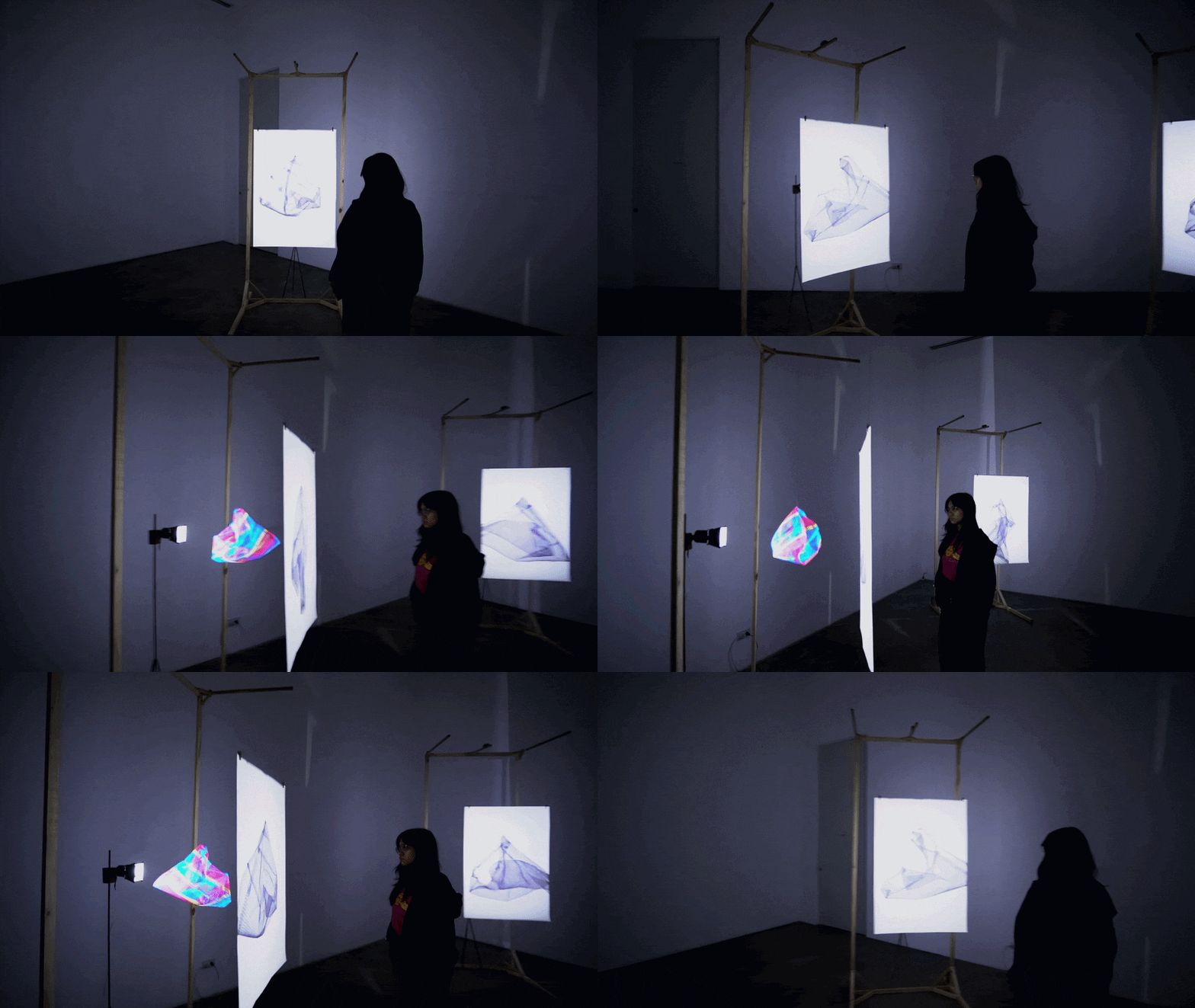
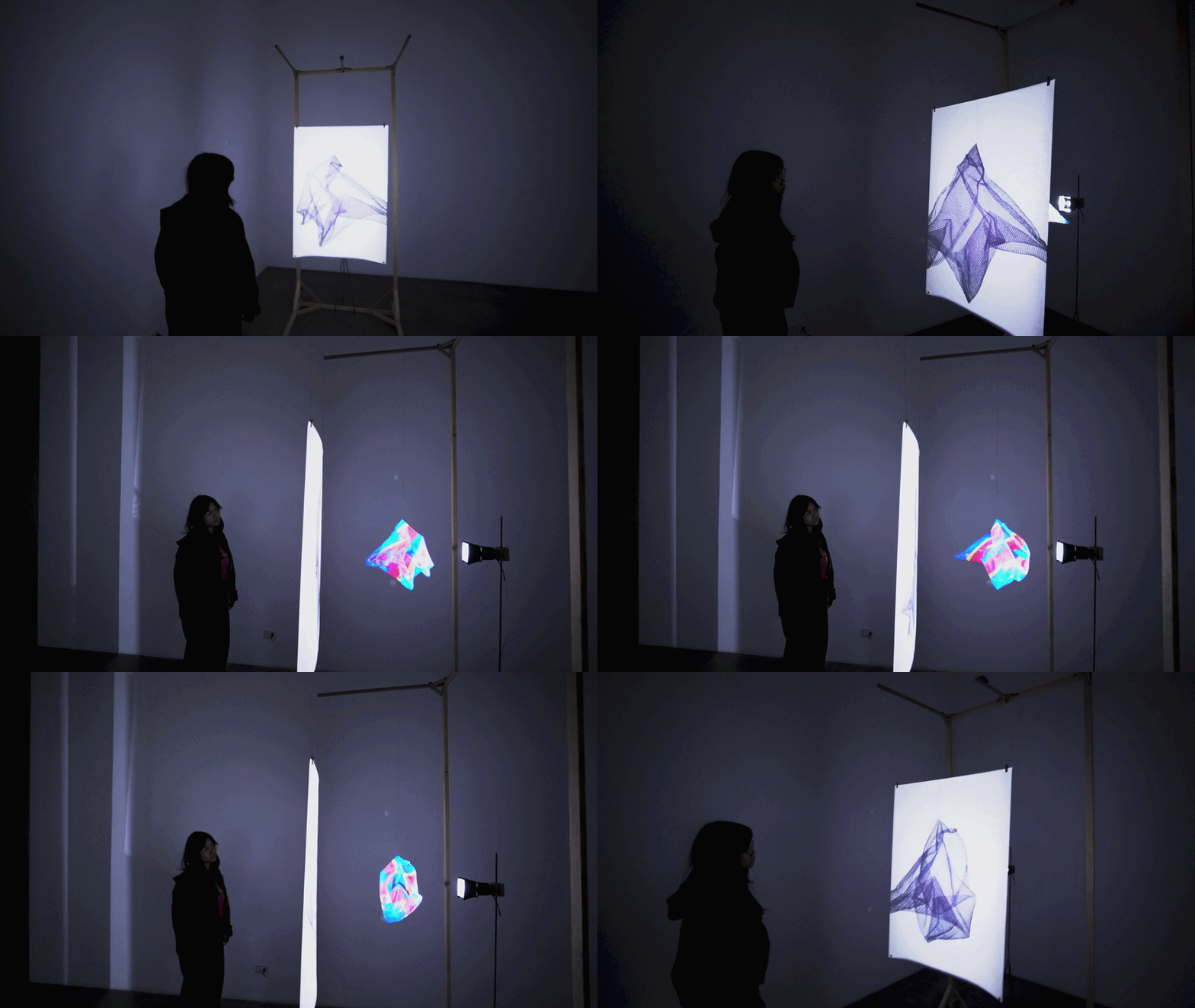
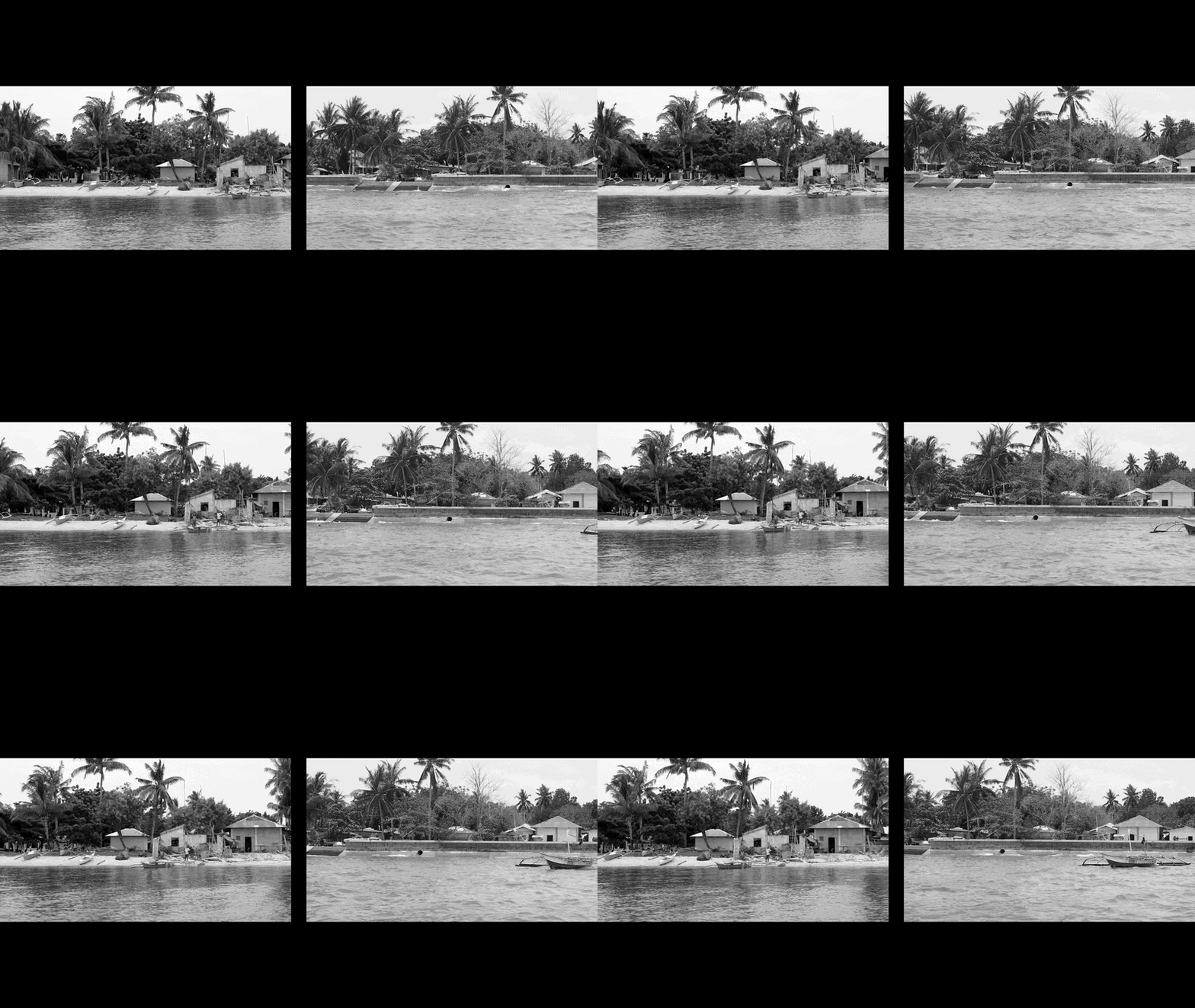
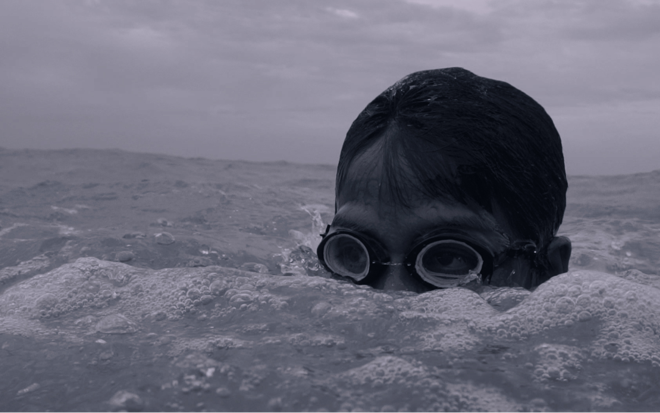
The Coconut Tree Methodology is both reflection and proposition: to sense the world and grasp the changes that are shaping it right now. For Martha Atienza, that world is anchored to the Bantayan Islands in Cebu, where the Dutch-Filipino artist was in part raised, bearing witness to coastlines being transformed by rising sea levels: a fact that Atienza has diligently documented as a central facet of her award-winning transdisciplinary practice. Highlighting that shift is footage the artist filmed in 2026 of a seawall built along the same stretch of coastline she shot in 2019, when fallen coconut trees peppered an open shore, their roots shaken loose by rising sea levels and consequent coastal erosion. As Atienza notes, those coconut trees were the first to register the transformations being wrought by climate change. First they fell. Then, they were cast adrift, carrying traces of past attachments while bearing the weight of uncertain futures into the sea. Some of these spectral sentinels found their way back to land with a warning, their forms transformed into embodied testimonies of their displacement: a politics without words.
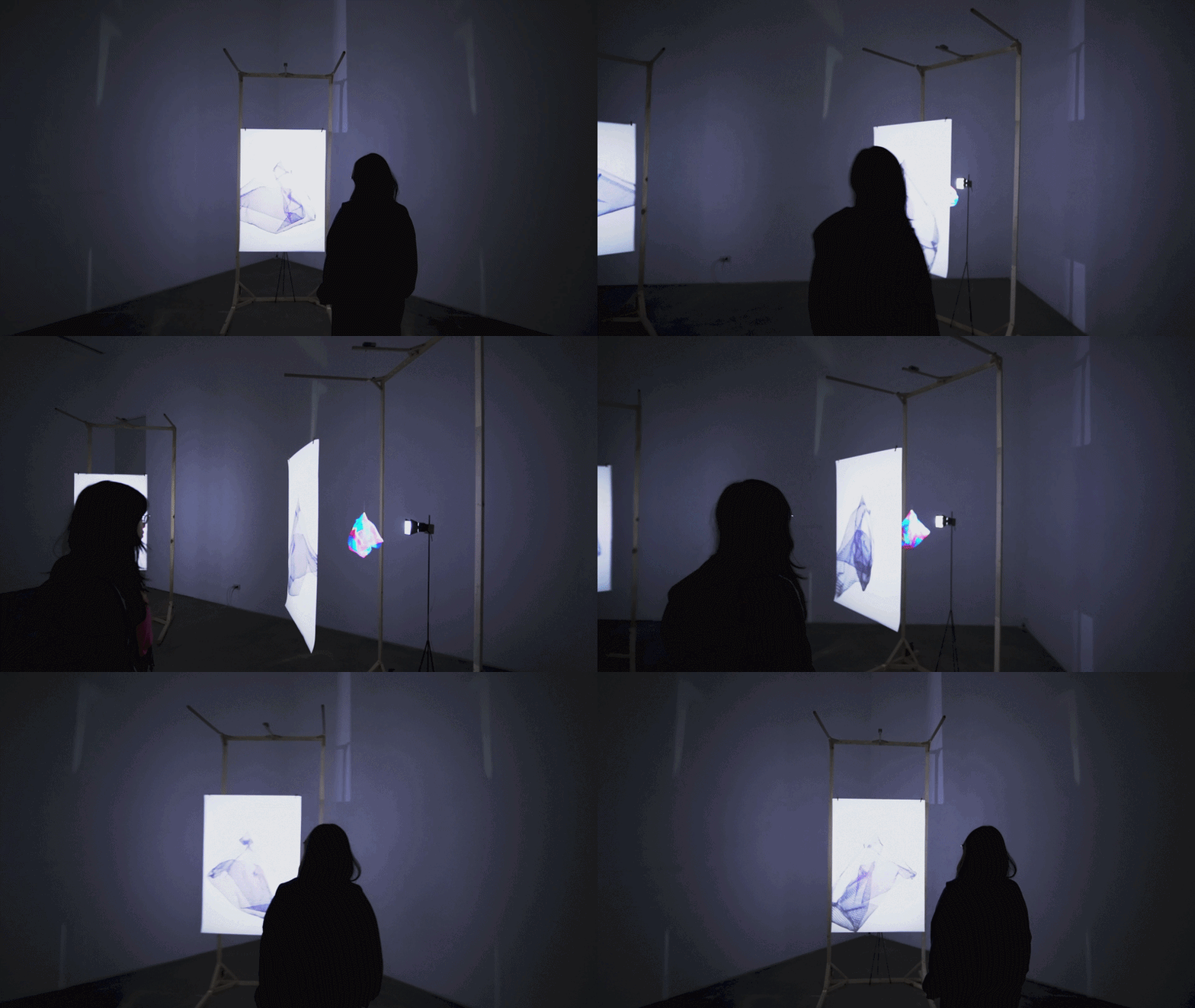
In this shifting landscape, everything becomes a witness, from the concrete encasing waterlines like tombs to the fisherfolk struggling to retain their connection to the sea. Even those who enter the gallery, far from Bantayan, are drawn into a reality that the coconut trees amplify in their monumental silence. Atienza honours each wordless testimony by gathering these drifting forms into an assembly where they might speak, beyond language, in terms that all living things must share.
The focus of the exhibition, as in Atienza’s practice, is the lived politics of land and sea. Because Bantayan is home, it has naturally become Atienza’s studio and laboratory as much as her community and audience: a place to work through ideas at a practical level. The artist has filmed on the archipelago since 2010, producing such masterworks as the 2017 Our Islands 11°16’58.4” N 123°45’07.0”E. This moving-image paean to Bantayan’s archipelagic history unfolds as an underwater staging of the annual Ati-Atihan festival held by the island’s Madridejos village in honour of Santo Niño, though the ritual was originally connected to indigenous inhabitants preceding Austronesian migrations, and was transformed under Spanish colonialism. Back then, Atienza was sounding the alarm on the impact climate change was having on Bantayan’s communities, with local fishermen forced into compression diving due to dwindling fish supplies amid rising and warming seas. In the video, divers from the community dressed as, among other things, Christ carrying a cross and a drug dealer under the guns of Duterte’s anti-drug squads, form a procession that crosses a barren sea floor.
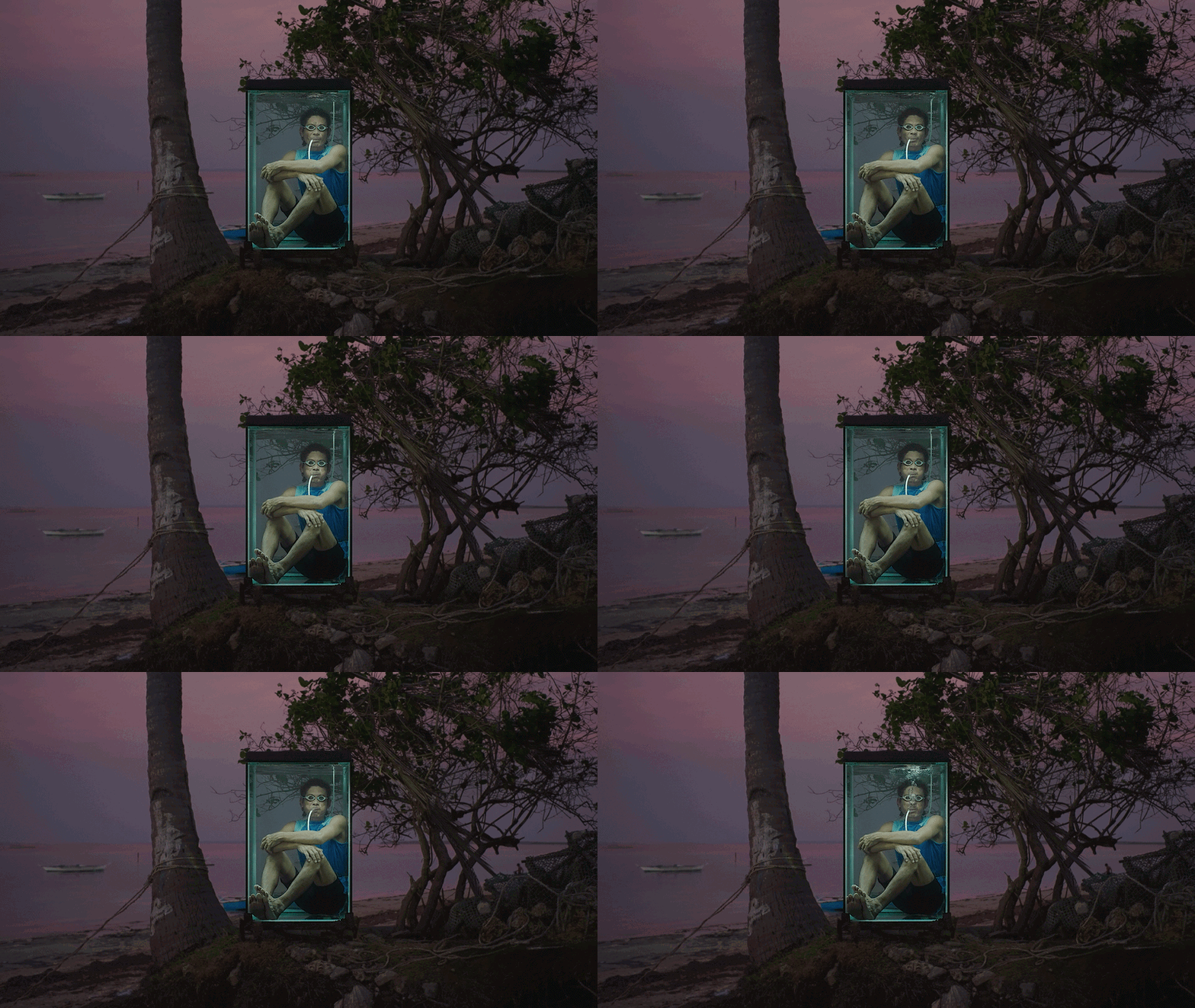
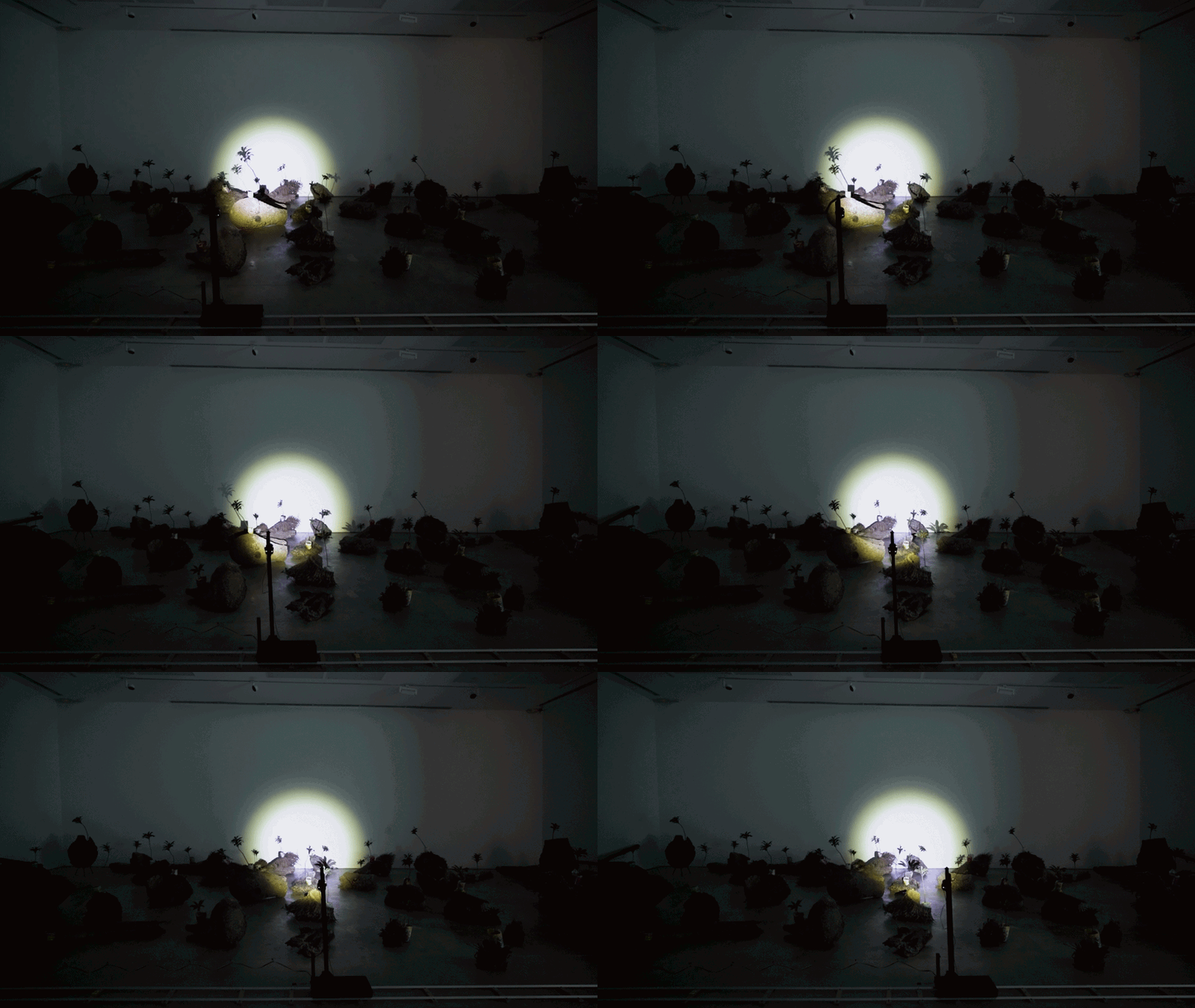
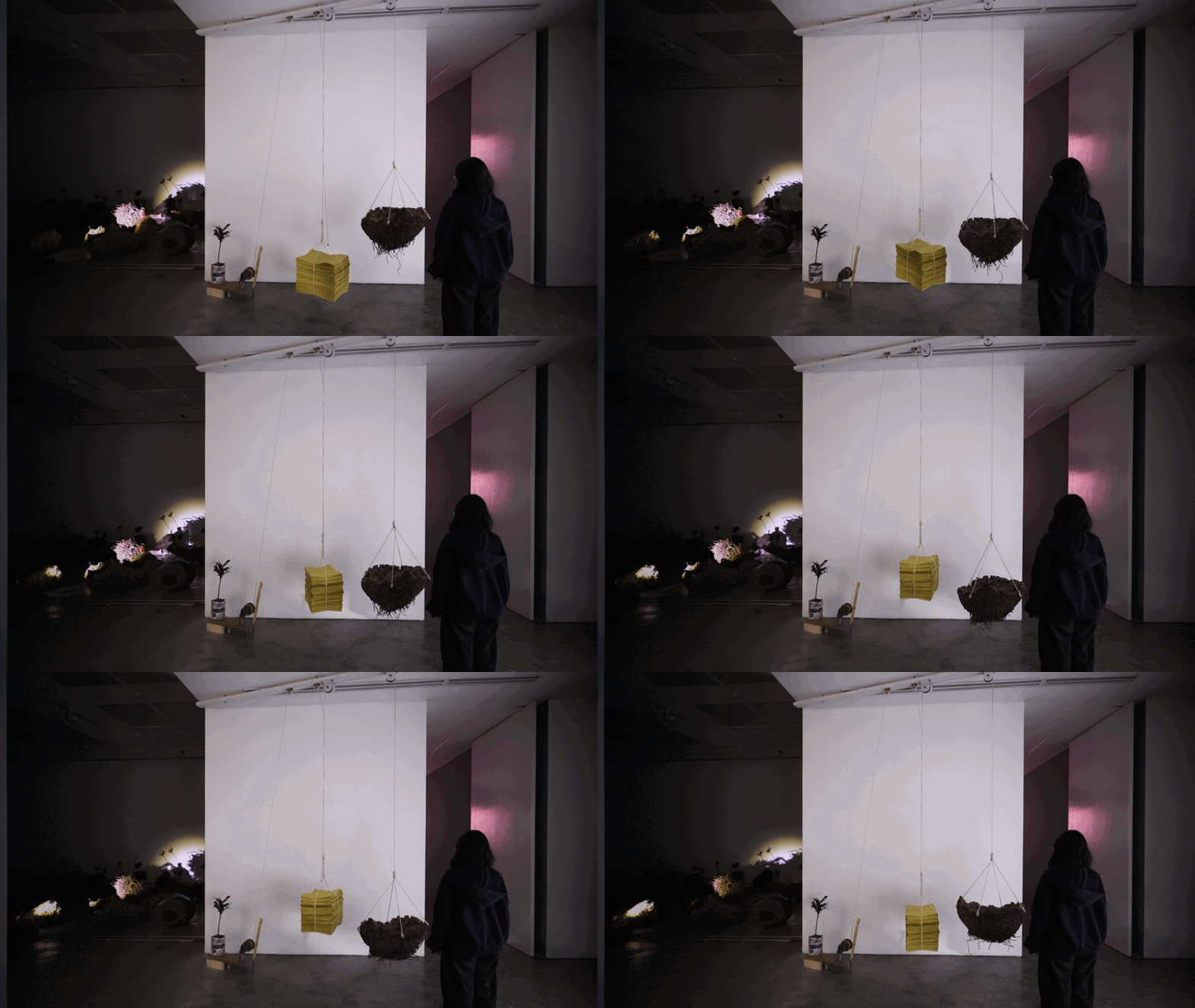
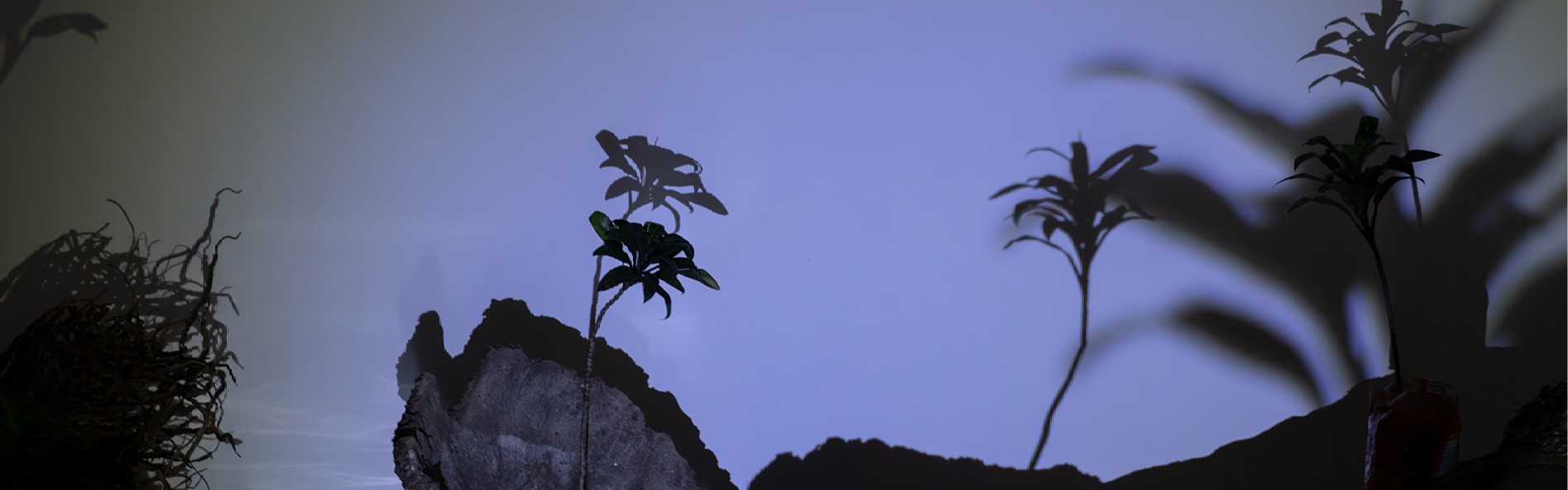
At once 21st century history painting and landscape study, Our Islands is all-encompassing. The Coconut Tree Methodology is a similar kind of immersion: a landscape to walk into, that speaks plainly about material loss and transformation. Each coconut tree is evidence: shaped by environmental degradation as much as systemic failure and a tragic lack of political will. A fisherman crouched inside an aquarium by a sea that feels like a front line, gazes outwards so that their mask shines like a mirror. Hanging fishing nets cast spectral shadows. None of this is simply about representation, and it is about much more than reflection. Everything is a microcosm. As Atienza says: “The installation is not only about climate change. It’s about how climate change exposes the structure of society itself.”
With that in mind, this exhibition grows out of the artist’s longterm engagement with intervening in society’s structures: an impulse that led Atienza to found GOODLand, a Bantayan-based organisation formalised in 2020. The group works with communities, organisations and institutions to uncover, archive, and apply intergenerational knowledge to the real-world, real-time politics of climate change and its environmental, political, social, economic effects, including methods for sustainable living and forms of organisation. One initiative is Adlaw sa Mga Mananagat, or FisherFolks Day, established in 2022, for the inter-generational fishing communities of Bantayan, many of whom have been forcibly relocated from their coastal homes to public and private housing projects while tourism is heavily promoted as an alternative livelihood. In its report, GOODland describe government-endorsed actions increasingly subjecting the islands to private development, including a 2019 bill removing Bantayan from the protected wilderness zone category. Acting as a counterweight, GOODland has supported groups like the youths of the archipelago’s Mambacayao Daku islet, who advocated for an ordinance to designate an 8-hectare Marine Protected Area along their coastline, with official recognition granted in 2022.
This all feeds into the coconut tree methodology as Atienza’s artistic method: what she describes as “a long-term process of observation, return, discussion and experimentation, where solutions emerge as byproducts of the questions people dare to ask together.” Everyone looks at driftwood in their own way, whether in a gallery or on a beach. To some, they are haunted: spectres infused with the spirits of the natural world, to be left alone. To others, they are material to be bent into some kind of form, in order to participate in the cycle of re-shaping life on earth. Perhaps they are a reminder of home: their shadows a portal into memories of here and elsewhere. Maybe in their silence, they are loud: alive as they are. Everyone has a connection to land and sea, after all, even if tangentially: which is why the politics around sustaining both involves everyone. Holding space for that connection is how the artist turns the problem of what is to be done into an invitation to become part of the work.
Words by Stephanie Bailey
Martha Atienza (b. 1981, Manila, Philippines; lives and works in Bantayan Island Philippines) is a Dutch-Filipino video artist exploring the format’s ability to document and question issues related to the environment, community, and development. Born to a Dutch mother and Filipino father, Atienza has navigated between these cultures throughout her life, and the oscillation between the two significantly influence her approach to observation, documentation, and the concept of the gaze. Her video is rooted in both ecological and sociological concerns as she studies the intricate interplay between local traditions, human subjectivity, and the natural world. Frequently examining her immediate surroundings, she excels in exploring the potential of art as a catalyst for societal transformation.
She won the Baloise Art Prize in Art Basel for her seminal work Our Islands in 2017. Prior to this, she was twice awarded the Ateneo Art Awards in Manila (2012/2016) and the Cultural Center of the Philippines Thirteen Artist Award (2015). Recent biennales and triennials include the 17th Istanbul Biennial, Istanbul (2022), Bangkok Art Biennale: Escape Routes, BACC, Bangkok (2020), Honolulu Biennial: To Make Wrong / Right / Now, Oahu, Hawaii (2019); and the 9th Asia Pacific Triennial of Contemporary Art, QAGOMA, Brisbane (2018). Recent group exhibitions include An Ocean in Every Drop at the Jameel Arts Center, Dubai (2022), Breaking Water at Contemporary Arts Center, Cincinnati (2022), and Animal Kingdom at Âme Nue Artspace, Hamburg (2021). Her solo exhibition The Protectors inaugurated Silverlens New York in 2022.
Works