A New Sun

Antonia Kuo
Silverlens, Manila

About

    Photographic negatives are recordings of light, time, and atmosphere. They can function like timestamps of an accelerated life where experiences are fleeting and memories are increasingly elusive. For 200 years, photographic capture has been an impulse meant to calm our anxieties about loss and satisfy our desires for retention. Using the same photographic materials and technologies, Antonia Kuo’s photochemical paintings point us to the volatile and unfixed nature of memory and images. Her paintings take us elsewhere far beyond, connecting the microcosm of the body (touch, breath, movement) to the macrocosm of the universe (stars, planets, heavens).

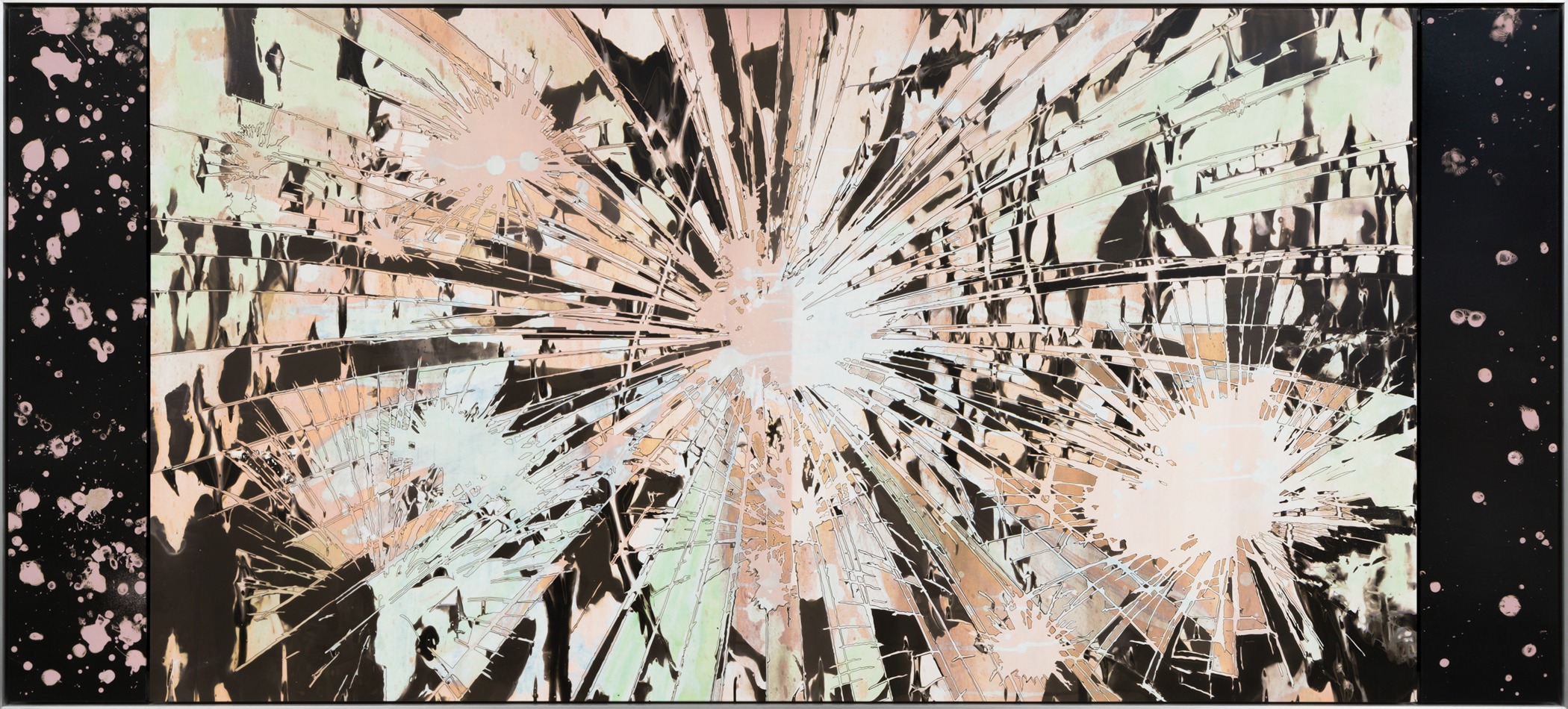
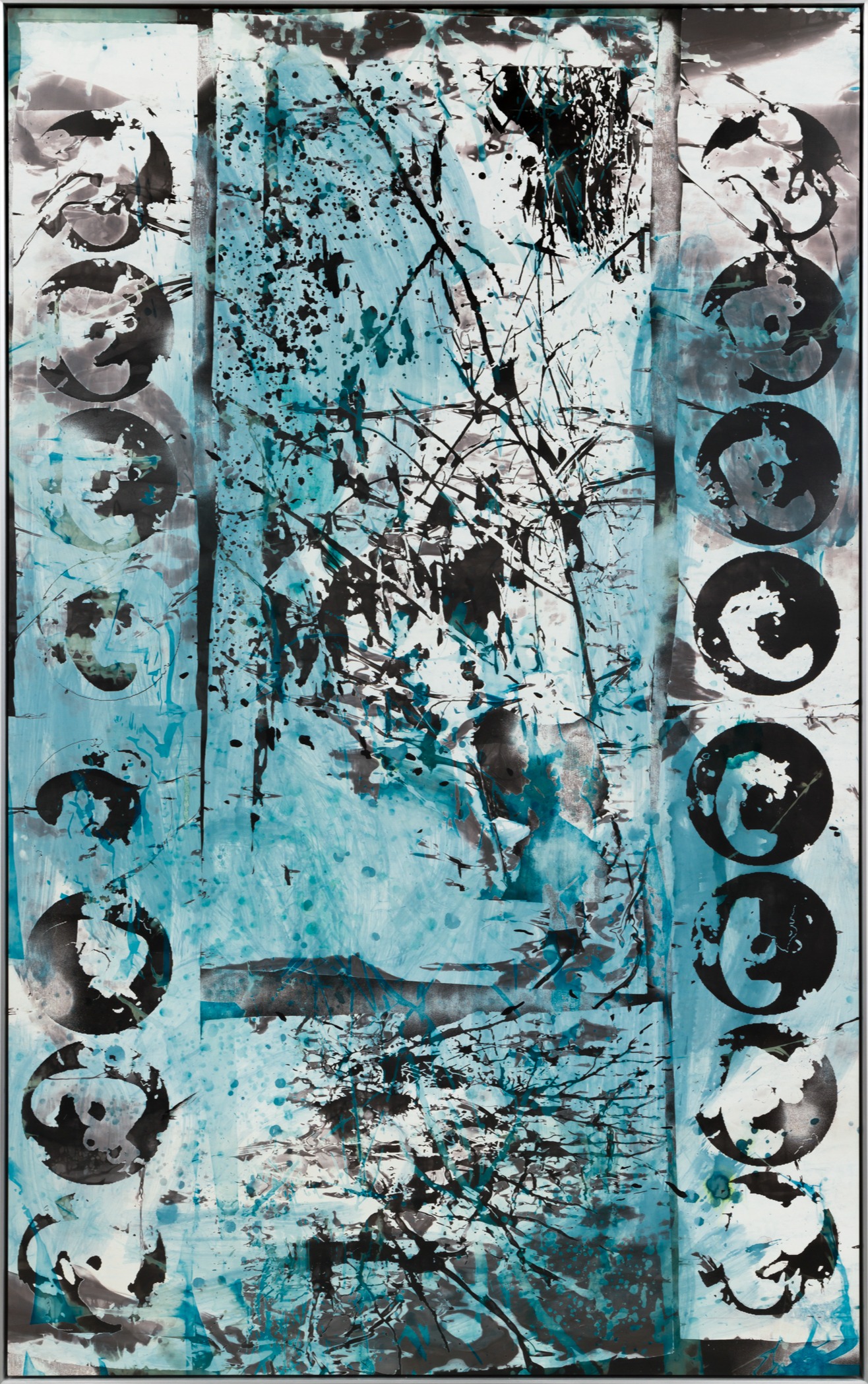
    A New Sun is an exploration of Kuo’s interdependent worlds—each a feeling, idea, or memory where one relies on the other for the production of dynamic life force. Colors, forms, and patterns conjure waterfalls, fog, eclipses, black holes, asteroid strikes, and other cataclysmic, environmental events—rooted in the Earth and in astronomy. This imagery generates explosive vigor, much like the formation of a new star, and the recent celebratory birth of Kuo’s youngest son, Marsden. One such painting, Mars Rising, is flanked by two vertical bands that evoke planetary bodies spinning in orbit as well as embryonic visions of gestational growth. Kuo’s work considers how new life is born from the collision of energy—sex, pressure, gravity, collapse—which results in outward expansion. Both the photographic process and the birthing process share formal and conceptual links to death, too. Kuo explains, “my process is a way to linger in an active state of change or sensitivity, tied to mortality and death, but insistently alive
    and mutable.”

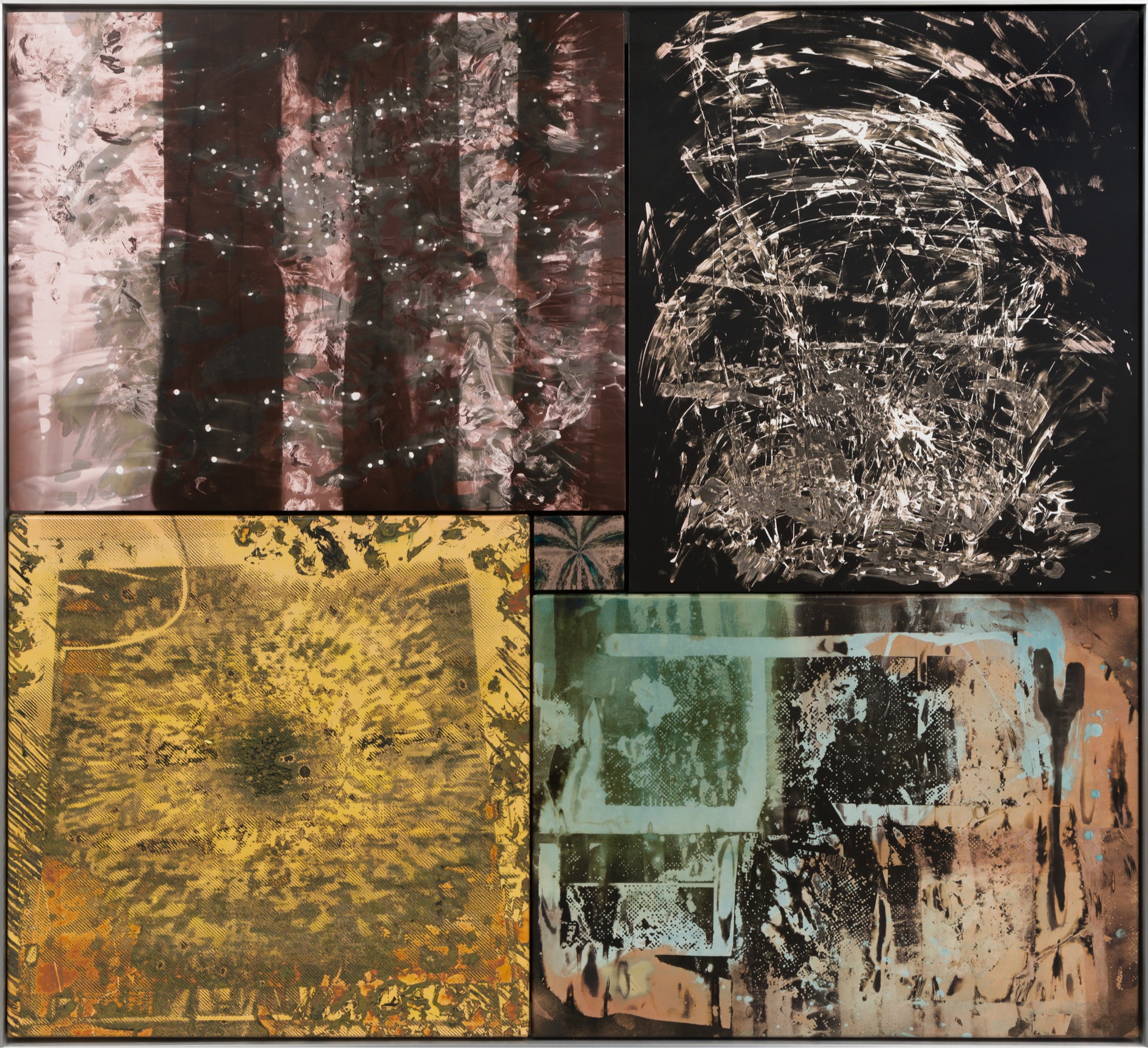
    In some works, Kuo unites disparate panels—often combining former, extant paintings to create new, living amalgamations—playing with shifting scales from cosmic to terrestrial to microscopic. Kuo’s configurations allude to how memory and matter often begin as small mundanities, and can build on themselves through associations with other energies. A five-panel composition titled Aperture features a small painting of light rays beginning from a central point that flare outward like a firework. Around it, four other panels communicate separate, yet interrelated events. The flow exudes from a single, tiny catalyst, much like the small pinhole of a camera—where information travels, is recorded, and makes an impression. In this work, there is productive confusion about the beginning and ending of cycles; as viewers, our sense of time is destabilized.

    Kuo’s multimedia works break the rules about precision and order indoctrinated in media like photography, printmaking, and traditional Chinese painting, an art form practiced by the artist’s mother. In this particular lineage, instead of attempting to recreate the likeness of a specific landscape, painters rely on memory—the human mind coalesces experiences informed by the site’s spirit of aliveness. Kuo’s works gather a similar energy and movement through space and time, like physics, or the seduction of reactivity to touch—caresses raising goosebumps on skin, copper toner transmuting colors on paper, and undulating reeds responding to water currents.

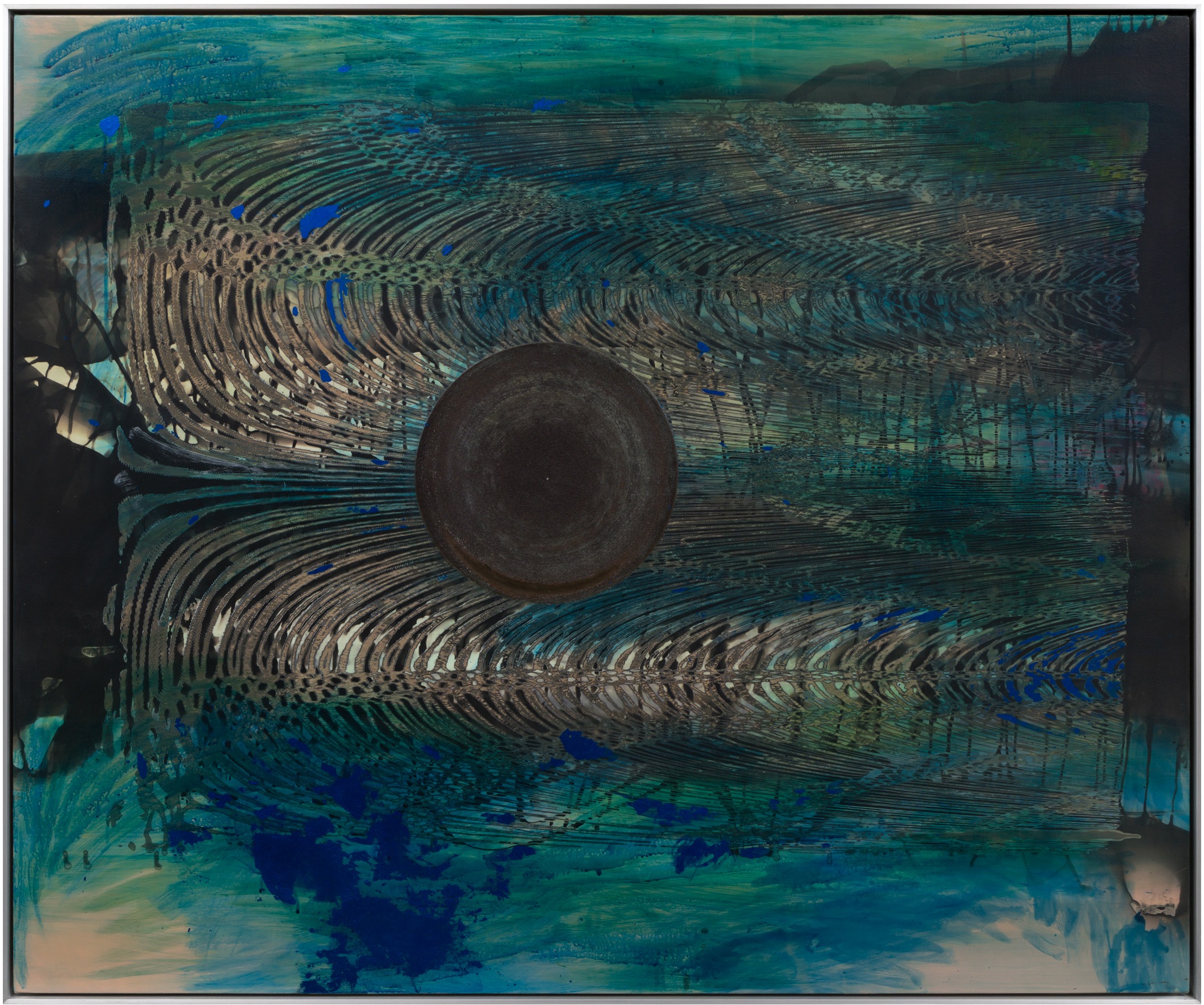
    Material sensitivity is also about remembering. Kuo calls this “time-based thinking” and it is apparent in how traces are recorded based on interactions between chemicals, forms, and technologies. In the artist’s own words, “memory is a conduit for expression.” By pushing materials to the limit without knowing the outcome, latent affinities emerge. The results are unpredictable, lacking an immediately obvious narrative and demanding a slowness of looking. Kuo’s works stimulate a kind of brain fog, a quiet simmer into chaos, a relinquishing of control, reflective of our reality. One painting, Zygote, exemplifies this through the inclusion of an abrasive disc that bears the markings of usage over time. Slightly off-center yet clearly the focal point of the composition, this collaged addition is the powerful nucleus of centrifugal force in the painting. Curved lines radiate from this black sanding disc and loop back inwards, much like rippling water or planetary rings. This dark central point also recalls the totality of a solar eclipse or a black hole. Perhaps the black hole is also a metaphor for the human mind, born from a microscopic zygote cell, expansive while alive, but eventually failing, dissolving.

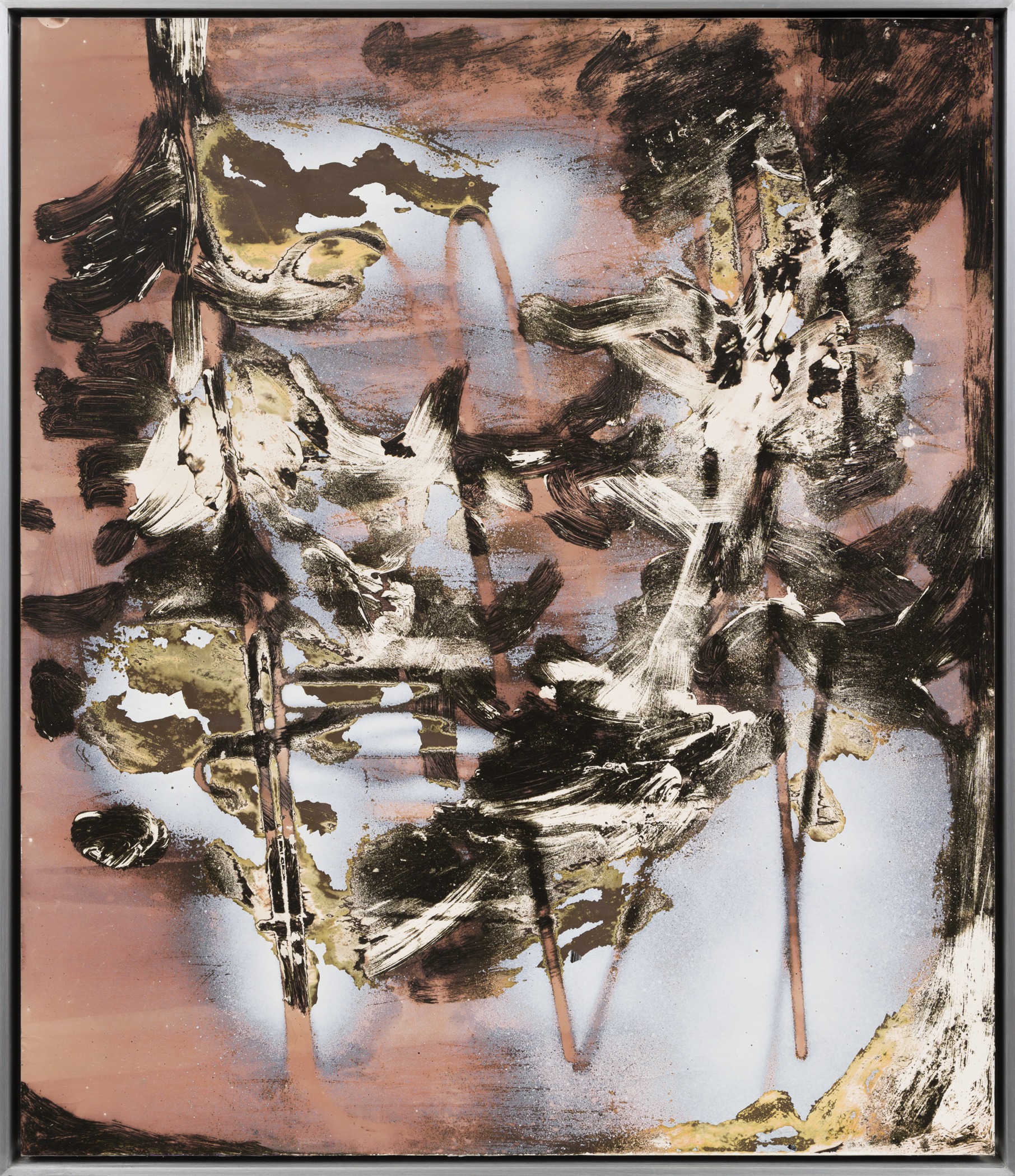
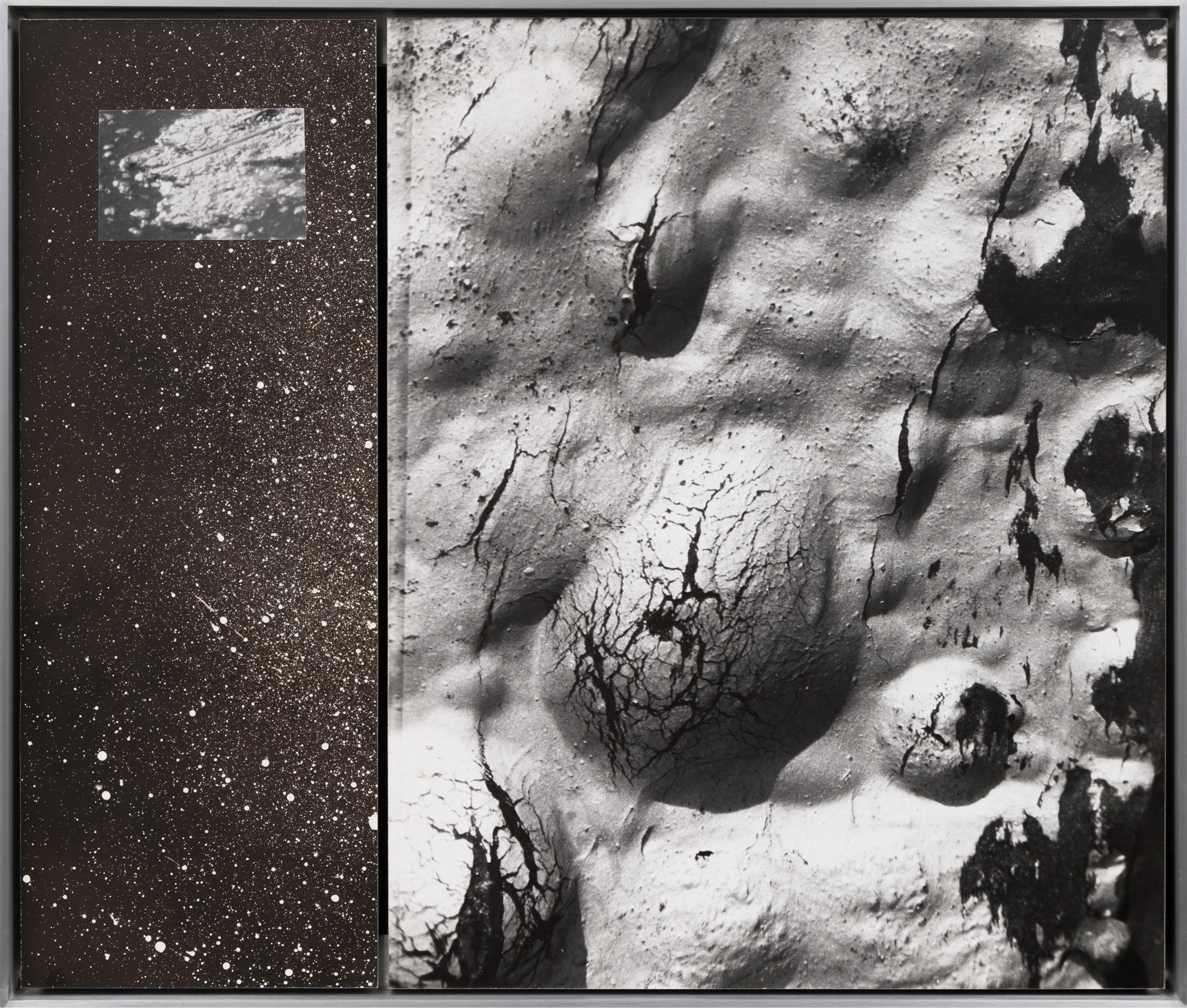
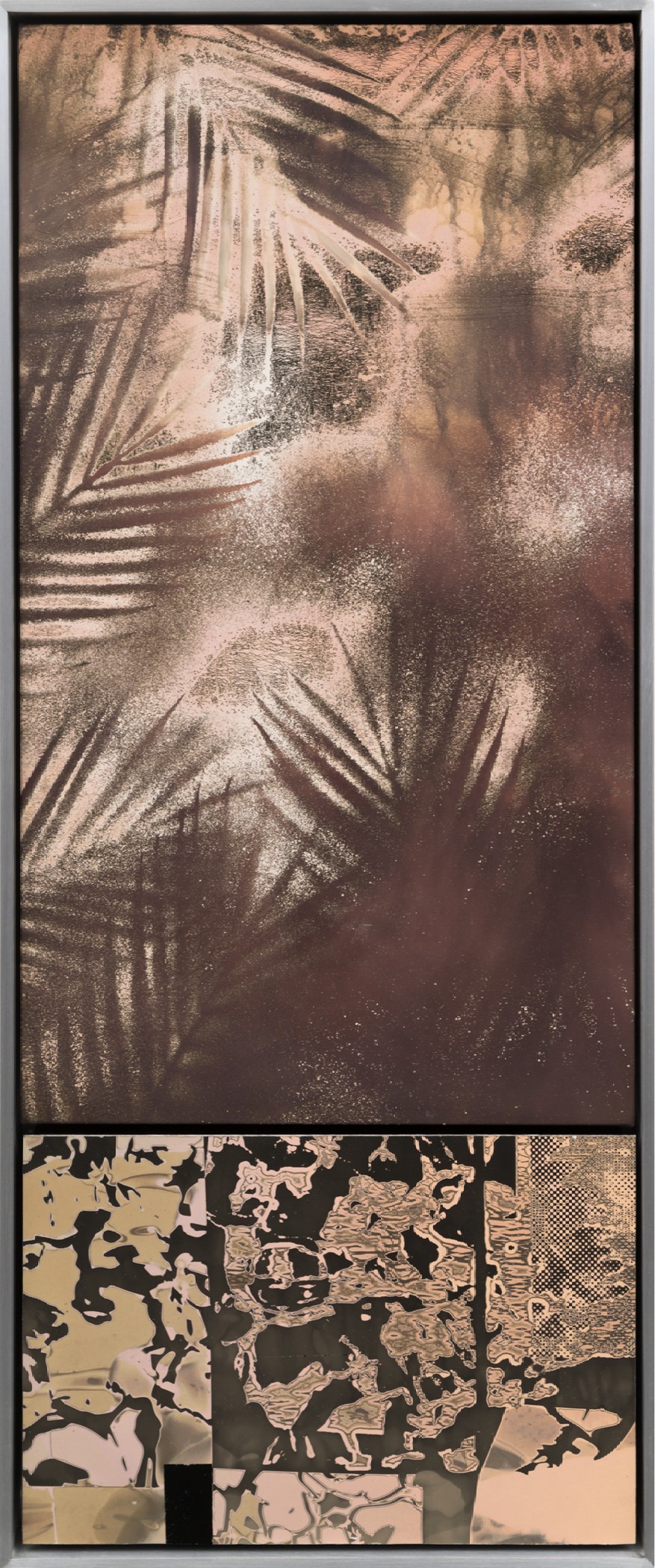
    While many of Kuo’s works in A New Sun touch on explosive events like conception, ignition, and birth, they also linger in the realm of the unknown and allude to the loss of memory. Visual cues like shadows and fog appear in paintings like Triple Stalk and Palm, both of which imply terrestrial life, but this remains intentionally unclear. Just when we think there is something recognizable to hold onto, Kuo instead encourages speculation through the fog. This memory play brings to mind a scene in Andrei Tarkovsky’s Solaris—an inspiration for the artist—where swaying grasses underwater play a fundamental role in the main character’s memories of Earth, while ultimately informing his hallucinations in outer space. Kuo’s work titled Prima Materia visualizes these conflicted feelings, too. In two panels, an image of a starry sky (made from splattered fixer) is juxtaposed by an image of a bubbly surface that recalls lunar craters, but is actually a close-up photo of bubbling tar on a rooftop in Brooklyn. In Kuo’s work, there is no hierarchy in the range between birth and death, remembering and forgetting, proximity and distance.

    Words by Alex Santana

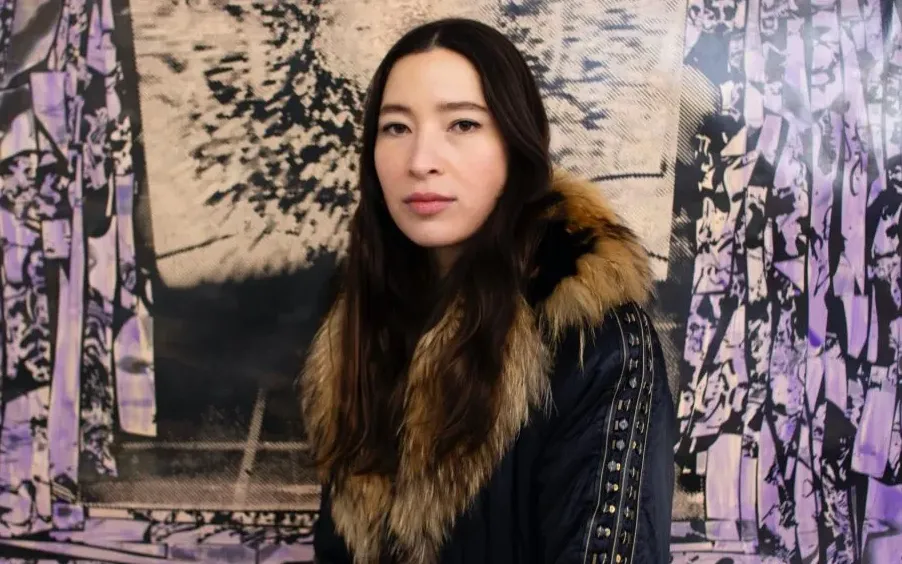
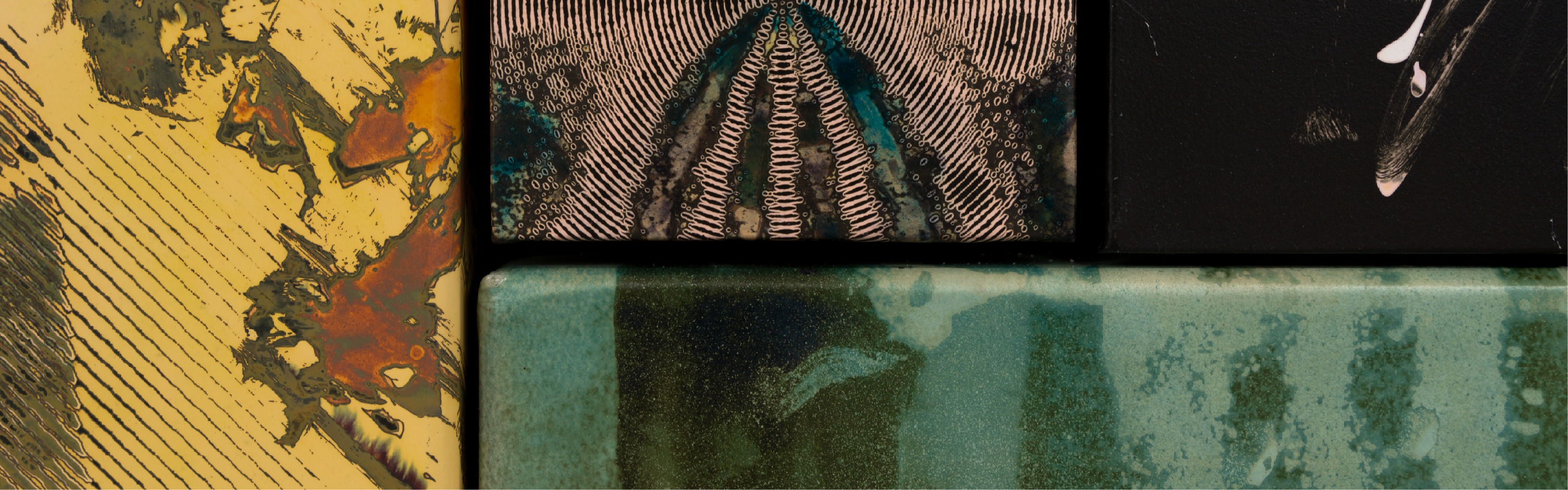
    Antonia Kuo’s practice centers around recording, image-making, and the potential of the photographic medium. Kuo creates her own intensive processes by which images and materials can be alchemically transformed. She often merges formal elements based on industrial materials and machine parts with intuitively-derived natural forms and gestures. In her unique “photochemical paintings” she utilizes light-sensitive paper and photochemistry to capture light, time and mark making, collapsing her drawing and painting practice with photographic materiality. Compound images are built up over multiple layers and remain tethered to some markers of representation, but ultimately coalesce into an interpretative field of entropic energies and phenomena. Like her photochemical works, Kuo’s sculptures serve as recordings of forms that are lost, obscured, and only partially remembered.

    Antonia Kuo (b. 1987, New York, NY) lives and works in New York, NY. She received an MFA from Yale University in 2018, her BFA from School of Fine Arts Boston and Tufts University in 2009, and a one-year certificate from the School of the International Center of Photography in 2013. Her recent solo and two-person exhibitions include Cooper Cole, Toronto, CA; Adams and Ollman, Portland, OR; Chapter NY, New York; and the Frye Art Museum, Seattle. Her work has been exhibited at Metropolitan Museum of Manila, PH; Centre Pompidou, Paris; the Whitney Museum of American Art, New York; Museum of Macan, Jakarta, ID; James Cohan, New York; Project Native Informant, London; Jeffrey Deitch, Los Angeles; Moskowitz Bayse, Los Angeles; Jack Barrett Gallery, New York; F, Houston; Chart, New York; Each Modern, Taipei; MAMOTH, London; Make Room, Los Angeles; among others. Kuo has performed and screened her work at Pioneer Works, Brooklyn, NY; Knockdown Center, Queens, NY; MoMA PS1, Queens, NY; and the Musee d’art contemporain de Montreal, among others. She is the recipient of Foundwork Artist Prize 2025 and has been an artist-in-residence at Mass MoCA, Vermont Studio Center, The Banff Centre, and was a MacDowell Colony Fellow. Kuo’s work is included in the collections of the Whitney Museum of American Art, New York and Centre Pompidou, Paris.

Photographic negatives are recordings of light, time, and atmosphere. They can function like timestamps of an accelerated life where experiences are fleeting and memories are increasingly elusive. For 200 years, photographic capture has been an impulse meant to calm our anxieties about loss and satisfy our desires for retention. Using the same photographic materials and technologies, Antonia Kuo’s photochemical paintings point us to the volatile and unfixed nature of memory and images. Her paintings take us elsewhere far beyond, connecting the microcosm of the body (touch, breath, movement) to the macrocosm of the universe (stars, planets, heavens).

A New Sun is an exploration of Kuo’s interdependent worlds—each a feeling, idea, or memory where one relies on the other for the production of dynamic life force. Colors, forms, and patterns conjure waterfalls, fog, eclipses, black holes, asteroid strikes, and other cataclysmic, environmental events—rooted in the Earth and in astronomy. This imagery generates explosive vigor, much like the formation of a new star, and the recent celebratory birth of Kuo’s youngest son, Marsden. One such painting, Mars Rising, is flanked by two vertical bands that evoke planetary bodies spinning in orbit as well as embryonic visions of gestational growth. Kuo’s work considers how new life is born from the collision of energy—sex, pressure, gravity, collapse—which results in outward expansion. Both the photographic process and the birthing process share formal and conceptual links to death, too. Kuo explains, “my process is a way to linger in an active state of change or sensitivity, tied to mortality and death, but insistently alive
and mutable.”

In some works, Kuo unites disparate panels—often combining former, extant paintings to create new, living amalgamations—playing with shifting scales from cosmic to terrestrial to microscopic. Kuo’s configurations allude to how memory and matter often begin as small mundanities, and can build on themselves through associations with other energies. A five-panel composition titled Aperture features a small painting of light rays beginning from a central point that flare outward like a firework. Around it, four other panels communicate separate, yet interrelated events. The flow exudes from a single, tiny catalyst, much like the small pinhole of a camera—where information travels, is recorded, and makes an impression. In this work, there is productive confusion about the beginning and ending of cycles; as viewers, our sense of time is destabilized.

Kuo’s multimedia works break the rules about precision and order indoctrinated in media like photography, printmaking, and traditional Chinese painting, an art form practiced by the artist’s mother. In this particular lineage, instead of attempting to recreate the likeness of a specific landscape, painters rely on memory—the human mind coalesces experiences informed by the site’s spirit of aliveness. Kuo’s works gather a similar energy and movement through space and time, like physics, or the seduction of reactivity to touch—caresses raising goosebumps on skin, copper toner transmuting colors on paper, and undulating reeds responding to water currents.

Material sensitivity is also about remembering. Kuo calls this “time-based thinking” and it is apparent in how traces are recorded based on interactions between chemicals, forms, and technologies. In the artist’s own words, “memory is a conduit for expression.” By pushing materials to the limit without knowing the outcome, latent affinities emerge. The results are unpredictable, lacking an immediately obvious narrative and demanding a slowness of looking. Kuo’s works stimulate a kind of brain fog, a quiet simmer into chaos, a relinquishing of control, reflective of our reality. One painting, Zygote, exemplifies this through the inclusion of an abrasive disc that bears the markings of usage over time. Slightly off-center yet clearly the focal point of the composition, this collaged addition is the powerful nucleus of centrifugal force in the painting. Curved lines radiate from this black sanding disc and loop back inwards, much like rippling water or planetary rings. This dark central point also recalls the totality of a solar eclipse or a black hole. Perhaps the black hole is also a metaphor for the human mind, born from a microscopic zygote cell, expansive while alive, but eventually failing, dissolving.

While many of Kuo’s works in A New Sun touch on explosive events like conception, ignition, and birth, they also linger in the realm of the unknown and allude to the loss of memory. Visual cues like shadows and fog appear in paintings like Triple Stalk and Palm, both of which imply terrestrial life, but this remains intentionally unclear. Just when we think there is something recognizable to hold onto, Kuo instead encourages speculation through the fog. This memory play brings to mind a scene in Andrei Tarkovsky’s Solaris—an inspiration for the artist—where swaying grasses underwater play a fundamental role in the main character’s memories of Earth, while ultimately informing his hallucinations in outer space. Kuo’s work titled Prima Materia visualizes these conflicted feelings, too. In two panels, an image of a starry sky (made from splattered fixer) is juxtaposed by an image of a bubbly surface that recalls lunar craters, but is actually a close-up photo of bubbling tar on a rooftop in Brooklyn. In Kuo’s work, there is no hierarchy in the range between birth and death, remembering and forgetting, proximity and distance.

Words by Alex Santana

Antonia Kuo’s practice centers around recording, image-making, and the potential of the photographic medium. Kuo creates her own intensive processes by which images and materials can be alchemically transformed. She often merges formal elements based on industrial materials and machine parts with intuitively-derived natural forms and gestures. In her unique “photochemical paintings” she utilizes light-sensitive paper and photochemistry to capture light, time and mark making, collapsing her drawing and painting practice with photographic materiality. Compound images are built up over multiple layers and remain tethered to some markers of representation, but ultimately coalesce into an interpretative field of entropic energies and phenomena. Like her photochemical works, Kuo’s sculptures serve as recordings of forms that are lost, obscured, and only partially remembered.

Antonia Kuo (b. 1987, New York, NY) lives and works in New York, NY. She received an MFA from Yale University in 2018, her BFA from School of Fine Arts Boston and Tufts University in 2009, and a one-year certificate from the School of the International Center of Photography in 2013. Her recent solo and two-person exhibitions include Cooper Cole, Toronto, CA; Adams and Ollman, Portland, OR; Chapter NY, New York; and the Frye Art Museum, Seattle. Her work has been exhibited at Metropolitan Museum of Manila, PH; Centre Pompidou, Paris; the Whitney Museum of American Art, New York; Museum of Macan, Jakarta, ID; James Cohan, New York; Project Native Informant, London; Jeffrey Deitch, Los Angeles; Moskowitz Bayse, Los Angeles; Jack Barrett Gallery, New York; F, Houston; Chart, New York; Each Modern, Taipei; MAMOTH, London; Make Room, Los Angeles; among others. Kuo has performed and screened her work at Pioneer Works, Brooklyn, NY; Knockdown Center, Queens, NY; MoMA PS1, Queens, NY; and the Musee d’art contemporain de Montreal, among others. She is the recipient of Foundwork Artist Prize 2025 and has been an artist-in-residence at Mass MoCA, Vermont Studio Center, The Banff Centre, and was a MacDowell Colony Fellow. Kuo’s work is included in the collections of the Whitney Museum of American Art, New York and Centre Pompidou, Paris.

Works
Antonia Kuo
Mars Rising
2026
18304
2
unique photochemical painting on light-sensitive silver gelatin paper in aluminum frame
88.5h x 55.5w x 2.25d in • 224.8h x 141w x 5.7d cm
-1
0.00
PHP
0
Details
Antonia Kuo
Aperture
2026
18305
2
unique photochemical paintings on light-sensitive silver gelatin paper in aluminum frame
70.25h x 77w x 2d in • 178.4h x 195.6w x 5.1d cm
-1
0.00
PHP
0
Details
Antonia Kuo
Zygote
2026
18306
2
unique photochemical painting on light-sensitive silver gelatin paper, metal leaf, abrasive disc, polyurethane in aluminum frame
45.5h x 54.5w x 2.25d in • 115.6h x 138.4w x 5.7d cm
-1
0.00
PHP
0
Details
Antonia Kuo
Triple Stalk
2026
18307
2
unique photochemical painting on light-sensitive silver gelatin paper, enamel, acrylic polyurethane in aluminum frame
24h x 20.625w x 1.25d in • 61h x 52.4w x 3.2d cm
-1
0.00
PHP
0
Details
Antonia Kuo
Exploding Stars
2026
18308
2
unique photochemical paintings on light-sensitive silver gelatin paper in aluminum frame
41h x 91w x 2.25d in • 104.1h x 231.1w x 5.7d cm
-1
0.00
PHP
0
Details
Antonia Kuo
Prima Materia
2026
18309
2
unique photochemical painting on light-sensitive silver gelatin paper, silver gelatin prints, acrylic polyurethane in aluminum frame
20.625h x 24.25w x 1.25d in • 52.4h x 61.6w x 3.2d cm
-1
0.00
PHP
0
Details
Antonia Kuo
Palm
2026
18310
2
unique photochemical paintings on light-sensitive silver gelatin paper, metal leaf, acrylic polyurethane in aluminum frame
12.75h x 30.5w x 2d in • 32.4h x 77.5w x 5.1d cm
-1
0.00
PHP
0
Details
PHA+PHN0cm9uZz5TSUxWRVJMRU5TPC9zdHJvbmc+IGlzIGNvbW1pdHRlZCB0byBwcm90ZWN0aW5nIHlvdXIgcHJpdmFjeS4gSW4gY29tcGxpYW5jZSB3aXRoIHRoZSBQaGlsaXBwaW5lIFJlcHVibGljIEFjdCwgTm8uIDEwMTczIGJldHRlciBrbm93biBhcyB0aGUgMjAxMiBEYXRhIFByaXZhY3kgQWN0LCB3ZSBjYW4gb25seSB1c2UgdGhlIGluZm9ybWF0aW9uIHRoYXQgd2Ugb2J0YWluIGFib3V0IHlvdSBsYXdmdWxseS4gV2UgbWF5IGNvbGxlY3QgcGVyc29uYWwgaW5mb3JtYXRpb24gYWJvdXQgeW91IHdoZW4geW91IHNpZ24gdXAgZm9yIG91ciBuZXdzbGV0dGVyIG9yIGNvbnRhY3QgdXMgd2l0aCBhbiBpbnF1aXJ5LjwvcD4KPHA+VGhlIHR5cGUgb2YgaW5mb3JtYXRpb24gd2UgbWF5IGNvbGxlY3QgaW5jbHVkZXMgeW91ciA8c3Ryb25nPk5hbWU8L3N0cm9uZz4sIDxzdHJvbmc+RW1haWw8L3N0cm9uZz4sIGFuZCA8c3Ryb25nPkNvbnRhY3QgTnVtYmVyPC9zdHJvbmc+LjwvcD4KPHA+V2UgbWF5IGNvbGxlY3QgcGF5bWVudCBpbmZvcm1hdGlvbiBmcm9tIHlvdSB0byBmdWxmaWxsIHRyYW5zYWN0aW9ucy4gVG8gcHJvY2VzcyBwYXltZW50cywgd2UgbWF5IGNvbGxlY3QgeW91ciBjcmVkaXQgY2FyZCBhbmQgYmFuayBhY2NvdW50IGRldGFpbHMuIFRoaXMgaW5mb3JtYXRpb24gbWF5IGJlIHNoYXJlZCB3aXRoIHRoaXJkIHBhcnR5IHBheW1lbnQgcHJvY2Vzc2luZyBzZXJ2aWNlcy48L3A+CjxwPlRvIGRlbGl2ZXIgeW91ciBwdXJjaGFzZSwgd2UgbWF5IHByb3ZpZGUgeW91ciBwZXJzb25hbCBpbmZvcm1hdGlvbiB0byB0aGlyZC1wYXJ0eSBsb2dpc3RpY3MgY29tcGFuaWVzIHdobyBhc3Npc3QgdXMgd2l0aCBvdXIgZGVsaXZlcmllcyBhbmQgc2hpcG1lbnRzLjwvcD4KPHA+VGhlIHBlcnNvbmFsIGluZm9ybWF0aW9uIHdoaWNoIHdlIGhvbGQgd2lsbCBiZSBoZWxkIHNlY3VyZWx5IGluIGFjY29yZGFuY2Ugd2l0aCBvdXIgaW50ZXJuYWwgc2VjdXJpdHkgcG9saWN5LiBXZSB3aWxsIG5ldmVyIGNvbGxlY3QgaW5mb3JtYXRpb24gYWJvdXQgeW91IHdpdGhvdXQgeW91ciBleHBsaWNpdCBjb25zZW50LjwvcD4KPHA+VGhlIGluZm9ybWF0aW9uIHdlIHN0b3JlIHdpbGwgYmUgYWNjdXJhdGUgYW5kIHVwIHRvIGRhdGUuIFlvdSBjYW4gY2hlY2sgdGhlIGluZm9ybWF0aW9uIHRoYXQgd2UgaG9sZCBhYm91dCB5b3UgYnkgZW1haWxpbmcgdXMuIElmIHlvdSBmaW5kIHRoYXQgdGhlcmUgYXJlIGFueSBpbmFjY3VyYWNpZXMsIHdlIHdpbGwgZGVsZXRlIG9yIGNvcnJlY3QgaXQgcHJvbXB0bHkuPC9wPgo8cD5XZSBtYXkgdXNlIHRlY2hub2xvZ3kgdG8gdHJhY2sgdGhlIHBhdHRlcm5zIG9mIGJlaGF2aW9yIG9mIHZpc2l0b3JzIHRvIG91ciB3ZWJzaXRlLiBUaGlzIG1heSBpbmNsdWRlIHVzaW5nIGEgImNvb2tpZSIgc3RvcmVkIG9uIHlvdXIgYnJvd3NlciB3aGljaCB5b3UgY2FuIHVzdWFsbHkgbW9kaWZ5IHRocm91Z2ggeW91ciBicm93c2VyIHRvIHByZXZlbnQgdGhpcyBmcm9tIGhhcHBlbmluZy48L3A+CjxwPldlIHdpbGwgcmV0YWluIHlvdXIgcGVyc29uYWwgaW5mb3JtYXRpb24gb25seSB3aGlsZSB3ZSBuZWVkIGl0IGZvciB0aGUgcmVhc29ucyBzdGF0ZWQgYWJvdmUgb3IgdW50aWwgeW91IHJlcXVlc3QgdGhhdCB3ZSBkZWxldGUgaXQgb24gb3VyIHJlY29yZHMuPC9wPgo8cD5JZiB5b3UgaGF2ZSBhbnkgcXVlc3Rpb25zIG9yIGNvbW1lbnRzIGFib3V0IG91ciBwcml2YWN5LCBwbGVhc2UgY29udGFjdCB1cyBhdCA8YSBocmVmPSJtYWlsdG86aW5xdWlyeUBzaWx2ZXJsZW5zZ2FsbGVyaWVzLmNvbSI+aW5xdWlyeUBzaWx2ZXJsZW5zZ2FsbGVyaWVzLmNvbTwvYT48L3A+
R2FpbiBhY2Nlc3MgdG8gZXhjbHVzaXZlIGdhbGxlcnkgaW5mb3JtYXRpb24sIGxhdGVzdCBleGhpYml0aW9ucywgPGJyIC8+CmFuZCBhcnRpc3QgdXBkYXRlcyBieSBzaWduaW5nIHVwIGZvciBvdXIgbmV3c2xldHRlciBiZWxvdy4=