
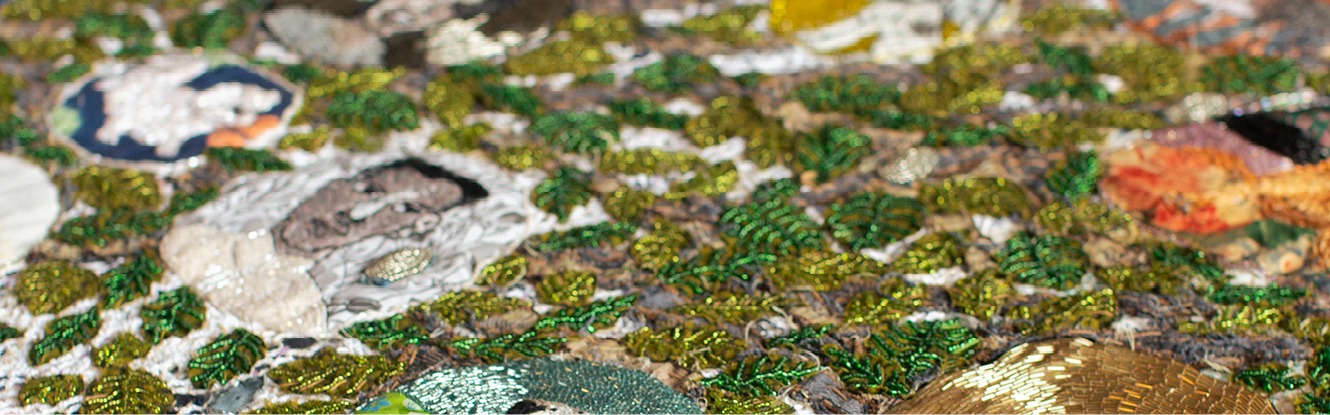
Torrents of Rain

Jakkai Siributr
Silverlens, New York

About

    Jakkai Siributr’s assemblages of fabrics, tchotchkes, beads, and personal memorabilia immediately prompt questions about the reasons to play with both the experiential and the iconic. Siributr grew up on the ‘spirit-filled’ streets of Bangkok, where there is an everyday animism: spirit-houses and shrines, devotional offerings of coke bottles and ornate garlands, glittering temples, and saffron-robed trees. This is one context with which to consider Siributr’s exceptional methods within contemporary art.

    Siributr also meditates on memories that persist and carry a discomforting sense of the uncanny, both personal and political. The works build on the excavation of his family’s history, and the ways in which those lives intersected with the troubled past of the country’s road to modernity. The tapestries provide integrity to those who bore the stigma of a perilous chapter in Thai history; some works even repurpose his parents’ clothes as both memorial and celebration.

    Siributr breaches the norms of art and craft: a refusal of regional specificity or a questioning of easy categorization that is not reducible to nativist or folksy interest. He allows us to look anew at art that claims a distinction in both making and meaning. All the more compelling when the experience of personal loss is at stake.

    Words by Brian Curtin

    Jakkai Siributr (b. 1969, Bangkok, Thailand; lives and works in Bangkok and Chiang Mai) is one of Southeast Asia’s leading contemporary artists, working primarily with textiles. Through intricately handmade tapestries, quilts, and installations, he responds to contemporary and historical social issues in Thailand and beyond.

    Siributr studied Textile and Fine Arts at Indiana University, Bloomington, USA, and Printed Textile Design at Philadelphia University, USA. His exhibitions include Phantoms of Asia: Contemporary Awakens the Past, Asian Art Museum of San Francisco (2012); Exploring the Cosmos: The Stupa as a Buddhist Symbol, Asian Civilisations Museum, Singapore (2013); Displaced: The Politics of Ethnicity and Religion in the Art of Jakkai Siributr, Bangkok Art and Culture Centre (2017); Dhaka Art Summit, Bangladesh Shilpakala Academy (2018); Spectrosynthesis II, Bangkok Art and Culture Centre (2019); Garmenting: Costume as Contemporary Art, Museum of Arts and Design, New York (2022); Matrilineal, 100 Tonson Foundation, Bangkok (2023–2024); and Everybody Wanna Be Happy, CHAT, Hong Kong (2023–2024). In 2024, he participated in the 15th Gwangju Biennale in the Thailand Pavilion.

    Siributr’s long-term collaborative project There’s no Place was featured in The Spirits of Maritime Crossing, an official collateral event of the 2024 Venice Biennale presented by the Bangkok Art Biennale. In November 2024, the project was presented at the Whitworth Art Gallery, Manchester, where it surveyed his practice and transformed one of the museum’s core collection galleries into its latest iteration. In 2026, the exhibition traveled to Canal Projects, New York.

    In 2025, Siributr participated in All Directions: Art That Moves You, the inaugural exhibition of FENIX museum, the Netherlands; the London Design Festival at the Victoria and Albert Museum, London; and the Setouchi Triennale, Japan. He also presented the solo exhibition Jakkai Siributr: Cultura (im)materiale at Murate Art District, Florence. That year, he was an honouree at the Hirshhorn and Smithsonian Artist x Artist Gala in New York.

    His works are held in public collections including FENIX museum, Rotterdam, the Netherlands; the National Taiwan Museum of Fine Arts, Taiwan; the Asian Art Museum of San Francisco, USA; the Bill and Melinda Gates Foundation, Seattle, USA; the Vehbi Koç Foundation, Istanbul, Turkey; and the Asian Civilisations Museum, Singapore, among others.
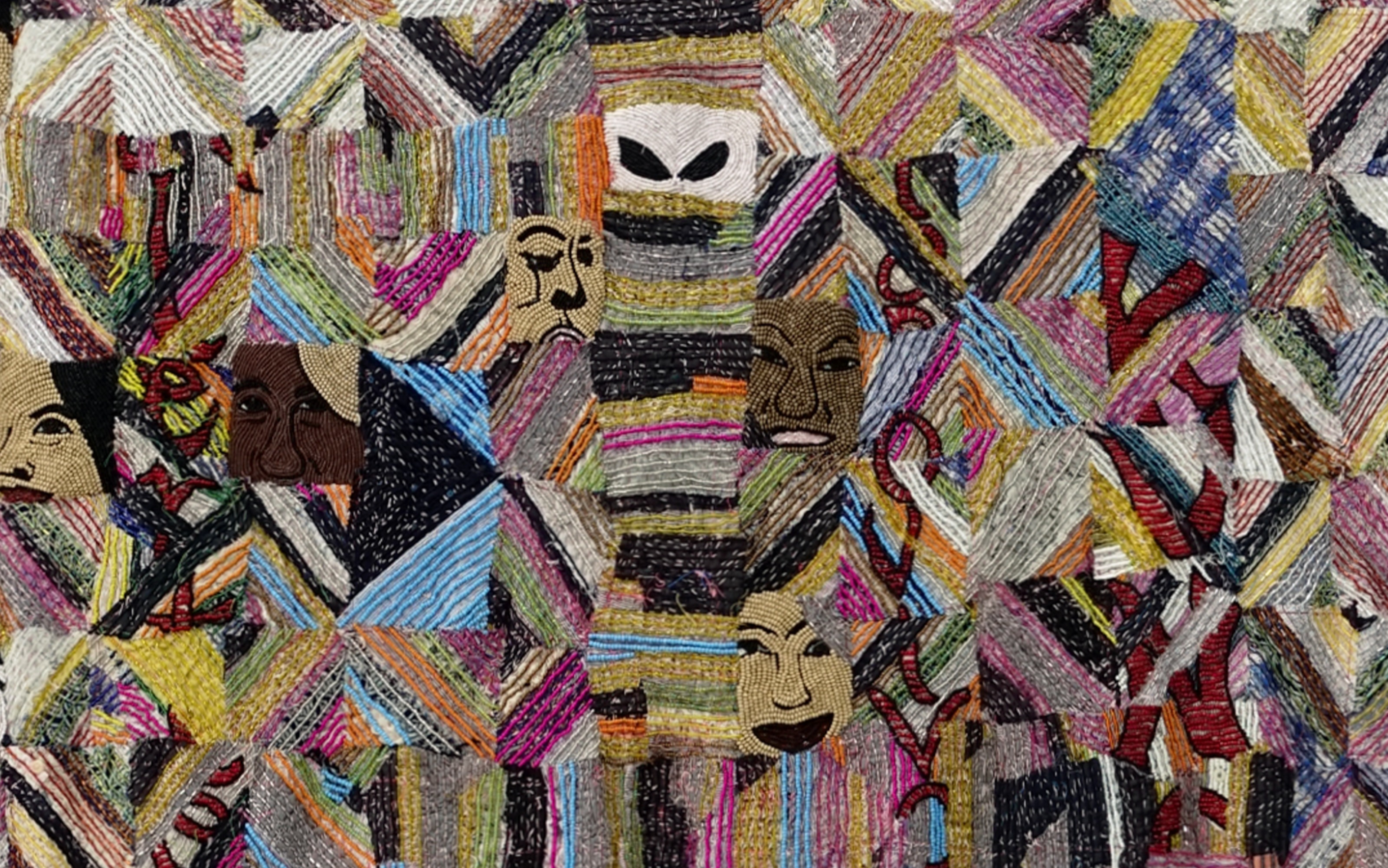
Jakkai Siributr’s assemblages of fabrics, tchotchkes, beads, and personal memorabilia immediately prompt questions about the reasons to play with both the experiential and the iconic. Siributr grew up on the ‘spirit-filled’ streets of Bangkok, where there is an everyday animism: spirit-houses and shrines, devotional offerings of coke bottles and ornate garlands, glittering temples, and saffron-robed trees. This is one context with which to consider Siributr’s exceptional methods within contemporary art.

Siributr also meditates on memories that persist and carry a discomforting sense of the uncanny, both personal and political. The works build on the excavation of his family’s history, and the ways in which those lives intersected with the troubled past of the country’s road to modernity. The tapestries provide integrity to those who bore the stigma of a perilous chapter in Thai history; some works even repurpose his parents’ clothes as both memorial and celebration.

Siributr breaches the norms of art and craft: a refusal of regional specificity or a questioning of easy categorization that is not reducible to nativist or folksy interest. He allows us to look anew at art that claims a distinction in both making and meaning. All the more compelling when the experience of personal loss is at stake.

Words by Brian Curtin

Jakkai Siributr (b. 1969, Bangkok, Thailand; lives and works in Bangkok and Chiang Mai) is one of Southeast Asia’s leading contemporary artists, working primarily with textiles. Through intricately handmade tapestries, quilts, and installations, he responds to contemporary and historical social issues in Thailand and beyond.

Siributr studied Textile and Fine Arts at Indiana University, Bloomington, USA, and Printed Textile Design at Philadelphia University, USA. His exhibitions include Phantoms of Asia: Contemporary Awakens the Past, Asian Art Museum of San Francisco (2012); Exploring the Cosmos: The Stupa as a Buddhist Symbol, Asian Civilisations Museum, Singapore (2013); Displaced: The Politics of Ethnicity and Religion in the Art of Jakkai Siributr, Bangkok Art and Culture Centre (2017); Dhaka Art Summit, Bangladesh Shilpakala Academy (2018); Spectrosynthesis II, Bangkok Art and Culture Centre (2019); Garmenting: Costume as Contemporary Art, Museum of Arts and Design, New York (2022); Matrilineal, 100 Tonson Foundation, Bangkok (2023–2024); and Everybody Wanna Be Happy, CHAT, Hong Kong (2023–2024). In 2024, he participated in the 15th Gwangju Biennale in the Thailand Pavilion.

Siributr’s long-term collaborative project There’s no Place was featured in The Spirits of Maritime Crossing, an official collateral event of the 2024 Venice Biennale presented by the Bangkok Art Biennale. In November 2024, the project was presented at the Whitworth Art Gallery, Manchester, where it surveyed his practice and transformed one of the museum’s core collection galleries into its latest iteration. In 2026, the exhibition traveled to Canal Projects, New York.

In 2025, Siributr participated in All Directions: Art That Moves You, the inaugural exhibition of FENIX museum, the Netherlands; the London Design Festival at the Victoria and Albert Museum, London; and the Setouchi Triennale, Japan. He also presented the solo exhibition Jakkai Siributr: Cultura (im)materiale at Murate Art District, Florence. That year, he was an honouree at the Hirshhorn and Smithsonian Artist x Artist Gala in New York.

His works are held in public collections including FENIX museum, Rotterdam, the Netherlands; the National Taiwan Museum of Fine Arts, Taiwan; the Asian Art Museum of San Francisco, USA; the Bill and Melinda Gates Foundation, Seattle, USA; the Vehbi Koç Foundation, Istanbul, Turkey; and the Asian Civilisations Museum, Singapore, among others.

PHA+PHN0cm9uZz5TSUxWRVJMRU5TPC9zdHJvbmc+IGlzIGNvbW1pdHRlZCB0byBwcm90ZWN0aW5nIHlvdXIgcHJpdmFjeS4gSW4gY29tcGxpYW5jZSB3aXRoIHRoZSBQaGlsaXBwaW5lIFJlcHVibGljIEFjdCwgTm8uIDEwMTczIGJldHRlciBrbm93biBhcyB0aGUgMjAxMiBEYXRhIFByaXZhY3kgQWN0LCB3ZSBjYW4gb25seSB1c2UgdGhlIGluZm9ybWF0aW9uIHRoYXQgd2Ugb2J0YWluIGFib3V0IHlvdSBsYXdmdWxseS4gV2UgbWF5IGNvbGxlY3QgcGVyc29uYWwgaW5mb3JtYXRpb24gYWJvdXQgeW91IHdoZW4geW91IHNpZ24gdXAgZm9yIG91ciBuZXdzbGV0dGVyIG9yIGNvbnRhY3QgdXMgd2l0aCBhbiBpbnF1aXJ5LjwvcD4KPHA+VGhlIHR5cGUgb2YgaW5mb3JtYXRpb24gd2UgbWF5IGNvbGxlY3QgaW5jbHVkZXMgeW91ciA8c3Ryb25nPk5hbWU8L3N0cm9uZz4sIDxzdHJvbmc+RW1haWw8L3N0cm9uZz4sIGFuZCA8c3Ryb25nPkNvbnRhY3QgTnVtYmVyPC9zdHJvbmc+LjwvcD4KPHA+V2UgbWF5IGNvbGxlY3QgcGF5bWVudCBpbmZvcm1hdGlvbiBmcm9tIHlvdSB0byBmdWxmaWxsIHRyYW5zYWN0aW9ucy4gVG8gcHJvY2VzcyBwYXltZW50cywgd2UgbWF5IGNvbGxlY3QgeW91ciBjcmVkaXQgY2FyZCBhbmQgYmFuayBhY2NvdW50IGRldGFpbHMuIFRoaXMgaW5mb3JtYXRpb24gbWF5IGJlIHNoYXJlZCB3aXRoIHRoaXJkIHBhcnR5IHBheW1lbnQgcHJvY2Vzc2luZyBzZXJ2aWNlcy48L3A+CjxwPlRvIGRlbGl2ZXIgeW91ciBwdXJjaGFzZSwgd2UgbWF5IHByb3ZpZGUgeW91ciBwZXJzb25hbCBpbmZvcm1hdGlvbiB0byB0aGlyZC1wYXJ0eSBsb2dpc3RpY3MgY29tcGFuaWVzIHdobyBhc3Npc3QgdXMgd2l0aCBvdXIgZGVsaXZlcmllcyBhbmQgc2hpcG1lbnRzLjwvcD4KPHA+VGhlIHBlcnNvbmFsIGluZm9ybWF0aW9uIHdoaWNoIHdlIGhvbGQgd2lsbCBiZSBoZWxkIHNlY3VyZWx5IGluIGFjY29yZGFuY2Ugd2l0aCBvdXIgaW50ZXJuYWwgc2VjdXJpdHkgcG9saWN5LiBXZSB3aWxsIG5ldmVyIGNvbGxlY3QgaW5mb3JtYXRpb24gYWJvdXQgeW91IHdpdGhvdXQgeW91ciBleHBsaWNpdCBjb25zZW50LjwvcD4KPHA+VGhlIGluZm9ybWF0aW9uIHdlIHN0b3JlIHdpbGwgYmUgYWNjdXJhdGUgYW5kIHVwIHRvIGRhdGUuIFlvdSBjYW4gY2hlY2sgdGhlIGluZm9ybWF0aW9uIHRoYXQgd2UgaG9sZCBhYm91dCB5b3UgYnkgZW1haWxpbmcgdXMuIElmIHlvdSBmaW5kIHRoYXQgdGhlcmUgYXJlIGFueSBpbmFjY3VyYWNpZXMsIHdlIHdpbGwgZGVsZXRlIG9yIGNvcnJlY3QgaXQgcHJvbXB0bHkuPC9wPgo8cD5XZSBtYXkgdXNlIHRlY2hub2xvZ3kgdG8gdHJhY2sgdGhlIHBhdHRlcm5zIG9mIGJlaGF2aW9yIG9mIHZpc2l0b3JzIHRvIG91ciB3ZWJzaXRlLiBUaGlzIG1heSBpbmNsdWRlIHVzaW5nIGEgImNvb2tpZSIgc3RvcmVkIG9uIHlvdXIgYnJvd3NlciB3aGljaCB5b3UgY2FuIHVzdWFsbHkgbW9kaWZ5IHRocm91Z2ggeW91ciBicm93c2VyIHRvIHByZXZlbnQgdGhpcyBmcm9tIGhhcHBlbmluZy48L3A+CjxwPldlIHdpbGwgcmV0YWluIHlvdXIgcGVyc29uYWwgaW5mb3JtYXRpb24gb25seSB3aGlsZSB3ZSBuZWVkIGl0IGZvciB0aGUgcmVhc29ucyBzdGF0ZWQgYWJvdmUgb3IgdW50aWwgeW91IHJlcXVlc3QgdGhhdCB3ZSBkZWxldGUgaXQgb24gb3VyIHJlY29yZHMuPC9wPgo8cD5JZiB5b3UgaGF2ZSBhbnkgcXVlc3Rpb25zIG9yIGNvbW1lbnRzIGFib3V0IG91ciBwcml2YWN5LCBwbGVhc2UgY29udGFjdCB1cyBhdCA8YSBocmVmPSJtYWlsdG86aW5xdWlyeUBzaWx2ZXJsZW5zZ2FsbGVyaWVzLmNvbSI+aW5xdWlyeUBzaWx2ZXJsZW5zZ2FsbGVyaWVzLmNvbTwvYT48L3A+
R2FpbiBhY2Nlc3MgdG8gZXhjbHVzaXZlIGdhbGxlcnkgaW5mb3JtYXRpb24sIGxhdGVzdCBleGhpYml0aW9ucywgPGJyIC8+CmFuZCBhcnRpc3QgdXBkYXRlcyBieSBzaWduaW5nIHVwIGZvciBvdXIgbmV3c2xldHRlciBiZWxvdy4=