Soft, Incandescent Rage

Liv Vinluan
Silverlens, Manila

About

    A Home under Duress (1)

    Historically documented as an aberration and a manifestation of a form of psychosis, an angry housewife was – more commonly then, but still, deceptively, now – perceived as something that must be attended to in the same manner as a domestic appliance in need of repair; the household’s functionality rests, inevitably, on theirs.

    Liv Vinluan looks at the interstitial, fragile moments that allow for a house, prone to falling apart, to hold its forbearance. Through the amalgamation of tropes of womanliness, marriage, motherhood, family devotion, and an infrastructure that keeps them evergreen, Liv creates  exquisite aberrations of what she names “peculiar expectations.” Symbols of pregnancy, homemaking, and eternal caregiving – phenomena unique to women – hold the weight of these expectations.

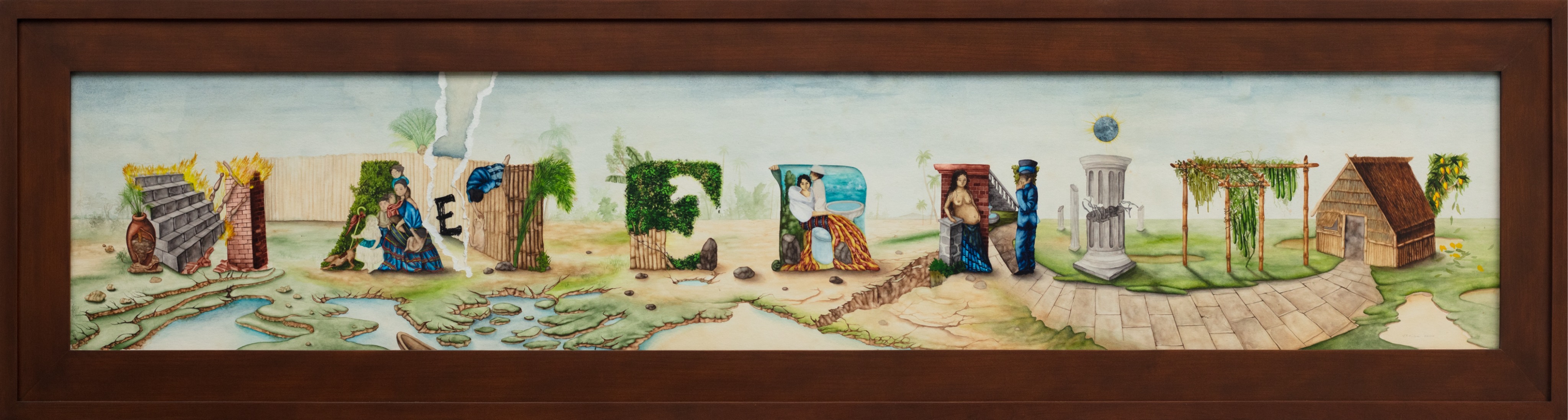
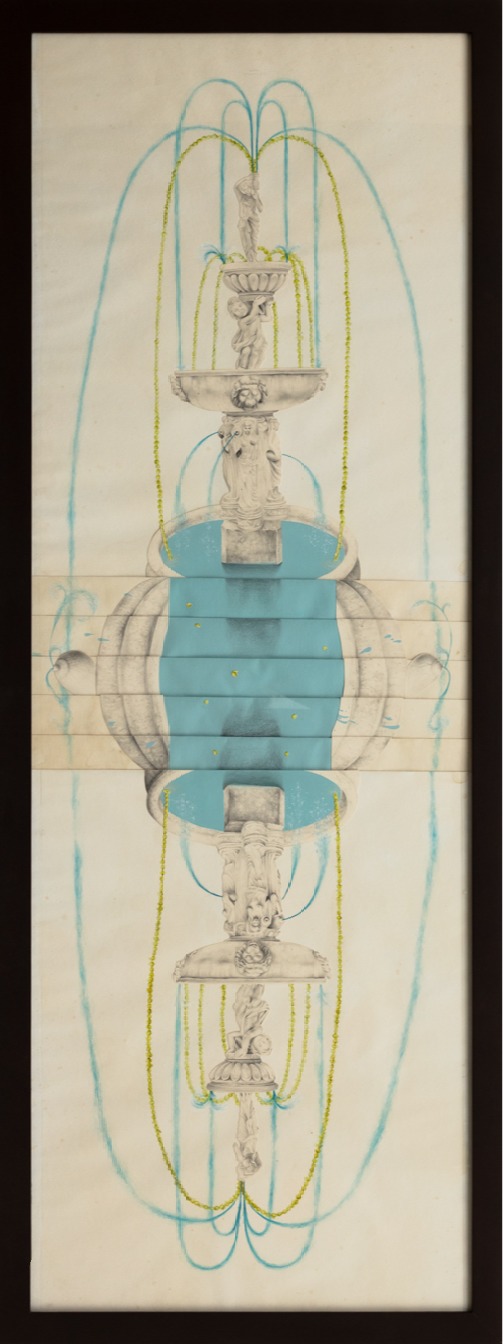
    What happens then to their bodies? Fragmented and merged into fluted columns, chandeliers, and symmetrical baroque fountains, they are found in the ornate foliage and graceful tendrils of these architectural enhancements. The Corinthian capital, whose likenesses, especially in So tell me, how do you spell motherhood?, becomes a stand-in for the figure of the model homemaker. Described by the Roman architect, Vitruvius, as an unusual invention borne of the death of a young woman (2), the highly decorative column is both soft light and imperturbable pillar of strength: glowing, loadbearing keeper of dwellings.

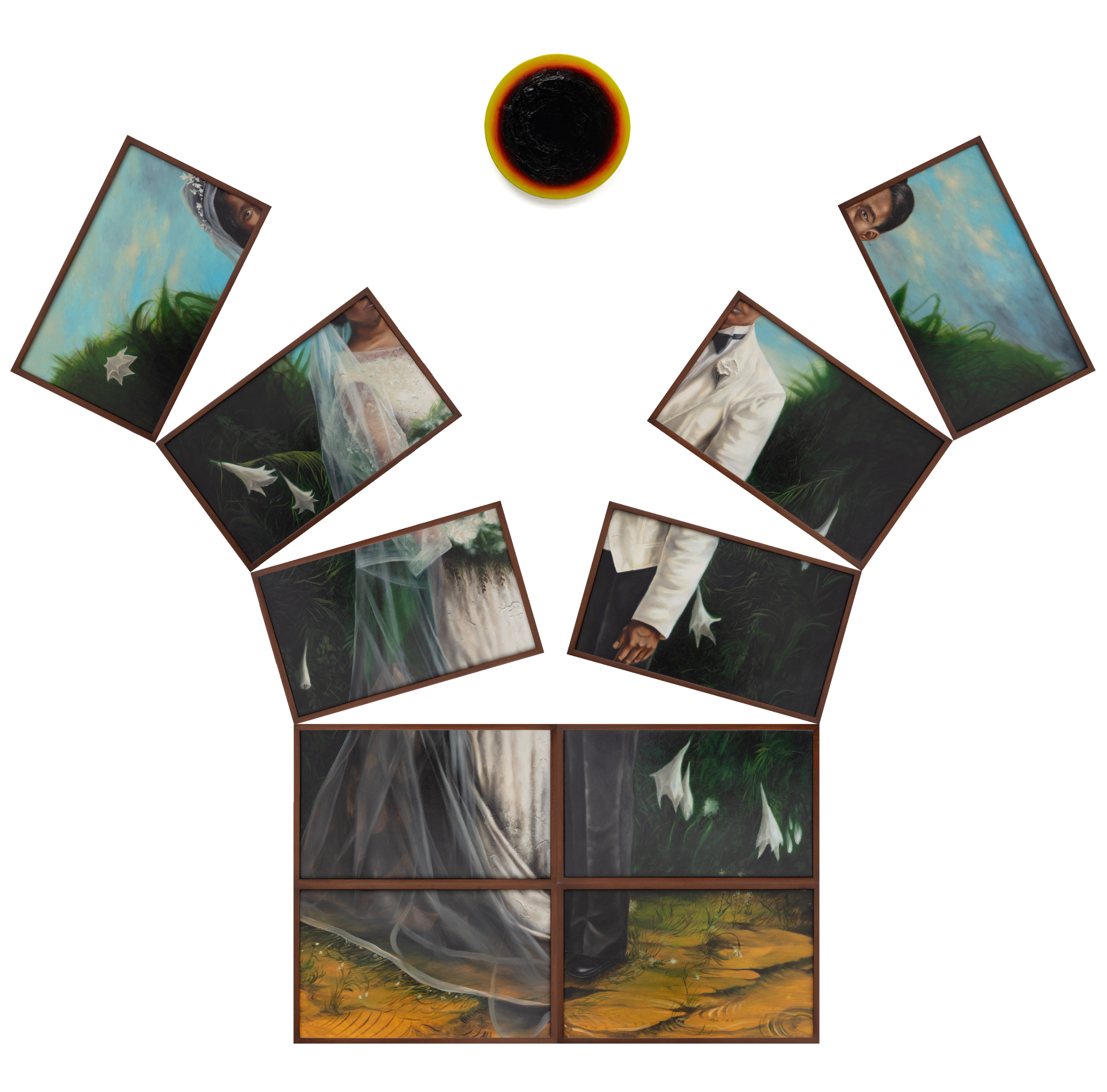
    This fragmentation is pursued more explicitly in Bb. Simplicia Saguil, which takes its cue from a sobering quote uttered by Nena Saguil, singular artist of mystical abstraction, in response to why she never married: “If I am alone, I am whole. If I am married, I am half.” Essentially a wedding portrait, sliced into equal parts and cleaved so that it opens in the middle like an unzipped jacket, it is dominated by a central orb, the collapse of a star, triggering a violent release. Liv asks: “How many times must we divide ourselves?”

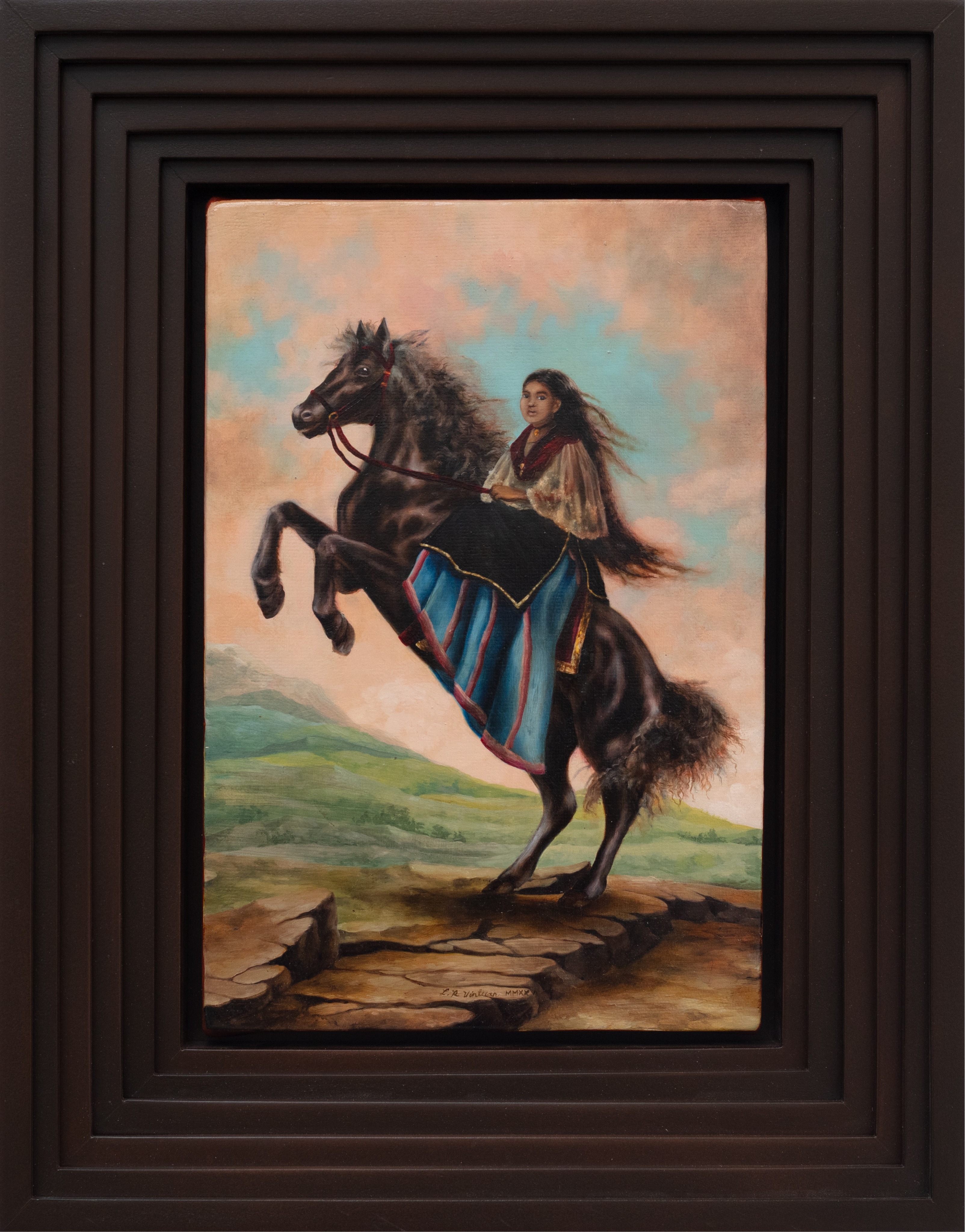
    The artist scrutinizes these womanly dispositions and sieves them through familiar genres and formats of colonial art, which she then conjoins with the idealisms of Western visual culture. Napoleon occurs at least twice: first through the references to a mythical Neoclassicism, and second, more tenderly, through a small equestrian portrait of a triumphant brown woman. In this marriage enabled by colonial relations, there emerges a proud, benevolent heroine with barely a scowl on her face.

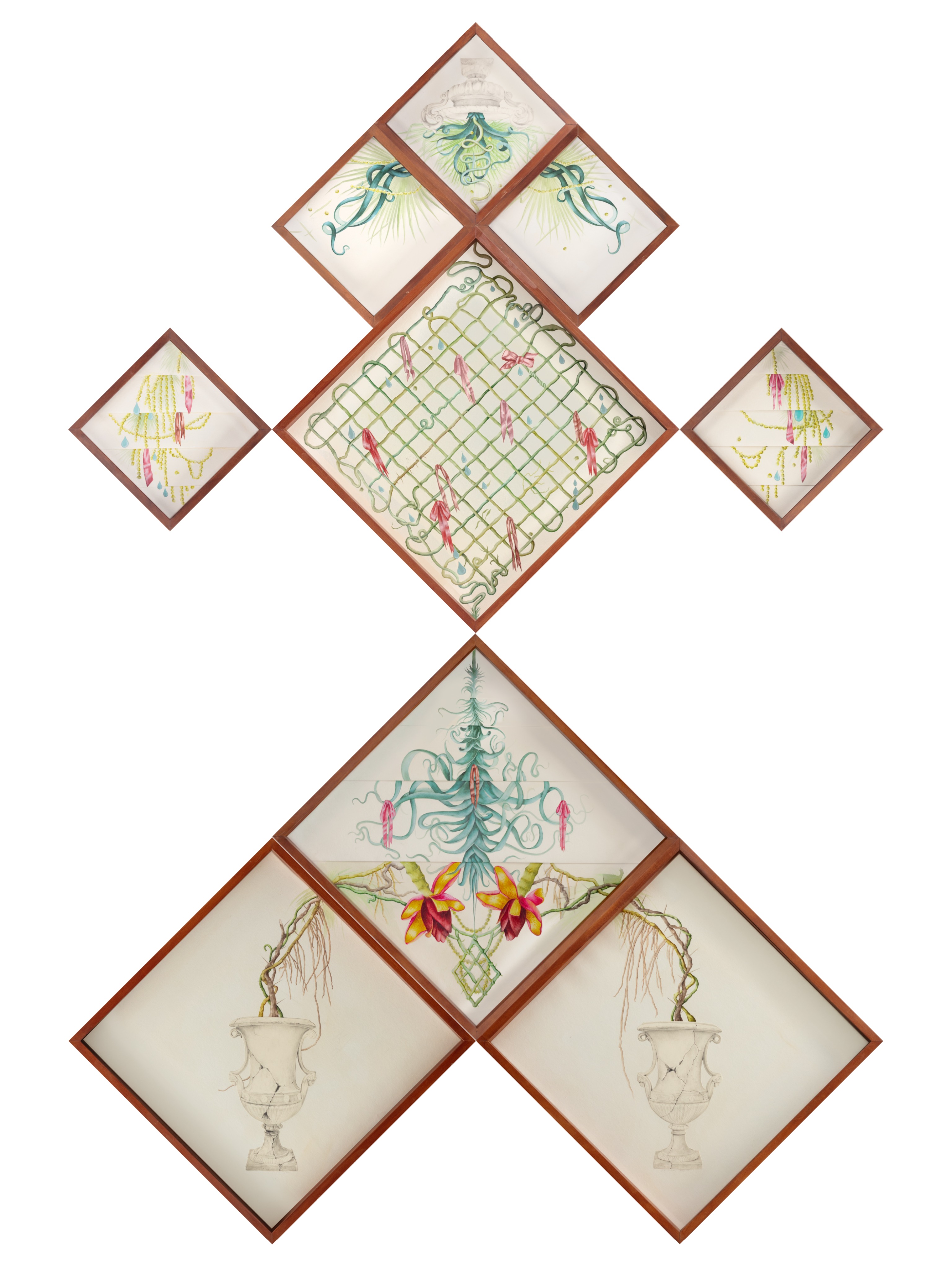
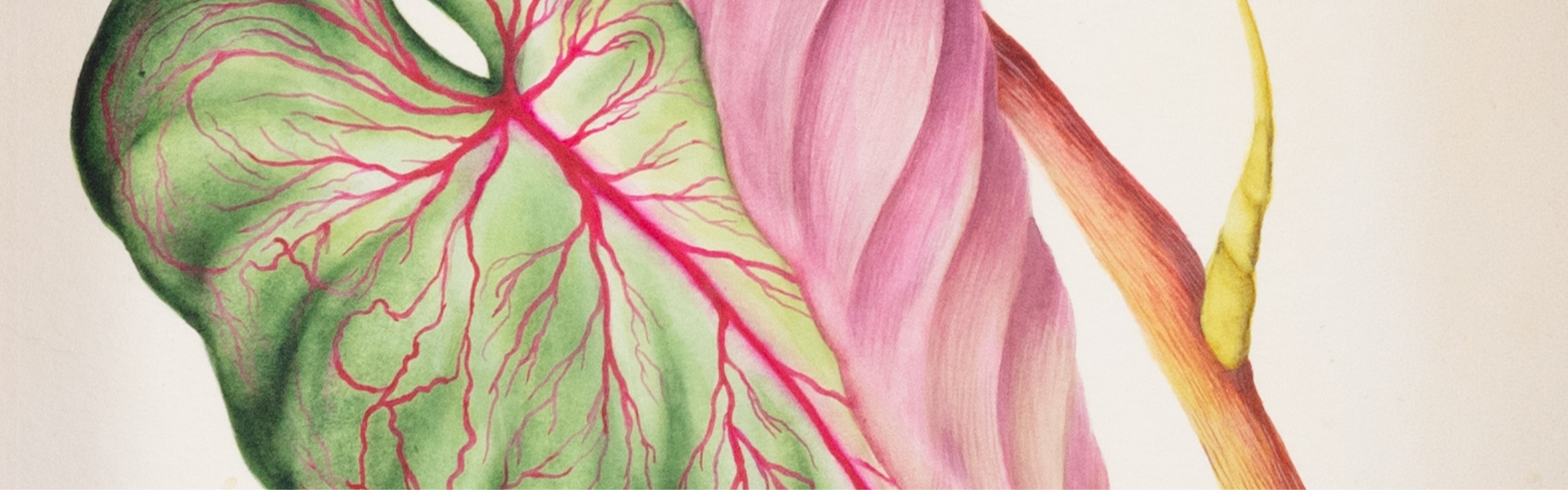
    High Expectations: Or, The pursuit for the most perfect, most pristine, most ideal, most virginal, most dutiful daughter through the grafting of hearts, stems and roots (Lineage Obedience) references colonial period botanical illustrations in the Philippines documented by Spanish foresters and botanists in order to capture the lay of the land. Through a sewing method using bookbinding tools, the pleated papers are held in place by waxed thread whose stitches are hidden in between the work’s precise folds. This skill, developed by Liv, who practices dressmaking and pattern making, embodies the work’s allusions to a generational “keeping in place” of kin, integral to filial roles inherited over time. 

    The work’s hidden reinforcements allow it to reconstruct a coherent image– a conceit that is evident, although sometimes not as invisibly, across the works in the exhibition. Liv writes: “the intimate, domestic sphere is a central site where colonial power is made and remade (again and again and again)” In soft, incandescent rage this making and remaking works towards their gradual reclamation. It is the artist’s bid to reclaim space for herself and others who desire to give shape and form to the conditions of femininity which, today, remain besieged by latter-day colonizers (3).

    1. From Jill Gidmark on the work of the Cebuana writer, Lina Espina Moore, whose novel she describes as a “...portrait of feminine strength under duress…” 

    2. Vitruvius claims that the profligate column originated from the death of a Corinth maiden whose nurse unwittingly, through the creation of a monument for the deceased girl, inspired Callimachus’ design for the column’s capital.

    3. The descriptor “latter- day colonizers” is borrowed from Marian Pastor Roces whose recent article, “Anatomy of a bad smell,” is a critique on the various transmutations of some creative industrialists, particularly those who work with traditional weaving cultures.

    Words by Lara Acuin

    Liv Vinluan was born in the late eighties in Ermita, Manila, and has been exhibiting her work for nearly two decades. History remains as the singular, defining cornerstone of Liv Vinluan's work. She continues her investigations into death and mortality, the cyclical nature of histories, the inconsistencies of human character and behavior, and the passage of time. In 2024, she received the Cultural Center of the Philippines' Thirteen Artists Award and is currently pursuing a Master of Fine Arts at the University of the Philippines in Diliman. She lives and works in the hills of Antipolo, Rizal, with her family.

A Home under Duress (1)

Historically documented as an aberration and a manifestation of a form of psychosis, an angry housewife was – more commonly then, but still, deceptively, now – perceived as something that must be attended to in the same manner as a domestic appliance in need of repair; the household’s functionality rests, inevitably, on theirs.

Liv Vinluan looks at the interstitial, fragile moments that allow for a house, prone to falling apart, to hold its forbearance. Through the amalgamation of tropes of womanliness, marriage, motherhood, family devotion, and an infrastructure that keeps them evergreen, Liv creates  exquisite aberrations of what she names “peculiar expectations.” Symbols of pregnancy, homemaking, and eternal caregiving – phenomena unique to women – hold the weight of these expectations.

What happens then to their bodies? Fragmented and merged into fluted columns, chandeliers, and symmetrical baroque fountains, they are found in the ornate foliage and graceful tendrils of these architectural enhancements. The Corinthian capital, whose likenesses, especially in So tell me, how do you spell motherhood?, becomes a stand-in for the figure of the model homemaker. Described by the Roman architect, Vitruvius, as an unusual invention borne of the death of a young woman (2), the highly decorative column is both soft light and imperturbable pillar of strength: glowing, loadbearing keeper of dwellings.

This fragmentation is pursued more explicitly in Bb. Simplicia Saguil, which takes its cue from a sobering quote uttered by Nena Saguil, singular artist of mystical abstraction, in response to why she never married: “If I am alone, I am whole. If I am married, I am half.” Essentially a wedding portrait, sliced into equal parts and cleaved so that it opens in the middle like an unzipped jacket, it is dominated by a central orb, the collapse of a star, triggering a violent release. Liv asks: “How many times must we divide ourselves?”

The artist scrutinizes these womanly dispositions and sieves them through familiar genres and formats of colonial art, which she then conjoins with the idealisms of Western visual culture. Napoleon occurs at least twice: first through the references to a mythical Neoclassicism, and second, more tenderly, through a small equestrian portrait of a triumphant brown woman. In this marriage enabled by colonial relations, there emerges a proud, benevolent heroine with barely a scowl on her face.

High Expectations: Or, The pursuit for the most perfect, most pristine, most ideal, most virginal, most dutiful daughter through the grafting of hearts, stems and roots (Lineage Obedience) references colonial period botanical illustrations in the Philippines documented by Spanish foresters and botanists in order to capture the lay of the land. Through a sewing method using bookbinding tools, the pleated papers are held in place by waxed thread whose stitches are hidden in between the work’s precise folds. This skill, developed by Liv, who practices dressmaking and pattern making, embodies the work’s allusions to a generational “keeping in place” of kin, integral to filial roles inherited over time. 

The work’s hidden reinforcements allow it to reconstruct a coherent image– a conceit that is evident, although sometimes not as invisibly, across the works in the exhibition. Liv writes: “the intimate, domestic sphere is a central site where colonial power is made and remade (again and again and again)” In soft, incandescent rage this making and remaking works towards their gradual reclamation. It is the artist’s bid to reclaim space for herself and others who desire to give shape and form to the conditions of femininity which, today, remain besieged by latter-day colonizers (3).

1. From Jill Gidmark on the work of the Cebuana writer, Lina Espina Moore, whose novel she describes as a “...portrait of feminine strength under duress…” 

2. Vitruvius claims that the profligate column originated from the death of a Corinth maiden whose nurse unwittingly, through the creation of a monument for the deceased girl, inspired Callimachus’ design for the column’s capital.

3. The descriptor “latter- day colonizers” is borrowed from Marian Pastor Roces whose recent article, “Anatomy of a bad smell,” is a critique on the various transmutations of some creative industrialists, particularly those who work with traditional weaving cultures.

Words by Lara Acuin

Liv Vinluan was born in the late eighties in Ermita, Manila, and has been exhibiting her work for nearly two decades. History remains as the singular, defining cornerstone of Liv Vinluan's work. She continues her investigations into death and mortality, the cyclical nature of histories, the inconsistencies of human character and behavior, and the passage of time. In 2024, she received the Cultural Center of the Philippines' Thirteen Artists Award and is currently pursuing a Master of Fine Arts at the University of the Philippines in Diliman. She lives and works in the hills of Antipolo, Rizal, with her family.

Works
Liv Vinluan
Napoleonic
2026
18168
2
oil on canvas
17.32h x 13.78w x 3.35d in • 44h x 35w x 8.5d cm
-1
0.00
PHP
0
Details
Liv Vinluan
So tell me, how do you spell motherhood?
2026
18167
2
watercolor on paper
21.85h x 81.5w x 1d in • 55.5h x 207w x 2.5d cm
-1
0.00
PHP
0
Details
Liv Vinluan
My cup hath runneth dry
2026
18166
2
graphite, watercolor and acrylic on paper
81.3h x 30.71w x 1d in • 206.5h x 78w x 2.5d cm
-1
0.00
PHP
0
Details
Liv Vinluan
High Expectations: Or, The pursuit for the most perfect, most pristine, most ideal, most virginal, most dutiful daughter through the grafting of hearts, stems and roots (Lineage Obedience)
2026
18165
2
watercolor on paper, 9-panel polyptych
78.74h x 58.07w x 2.36d in • 200h x 147.5w x 6d cm (overall)
-1
0.00
PHP
0
Details
Liv Vinluan
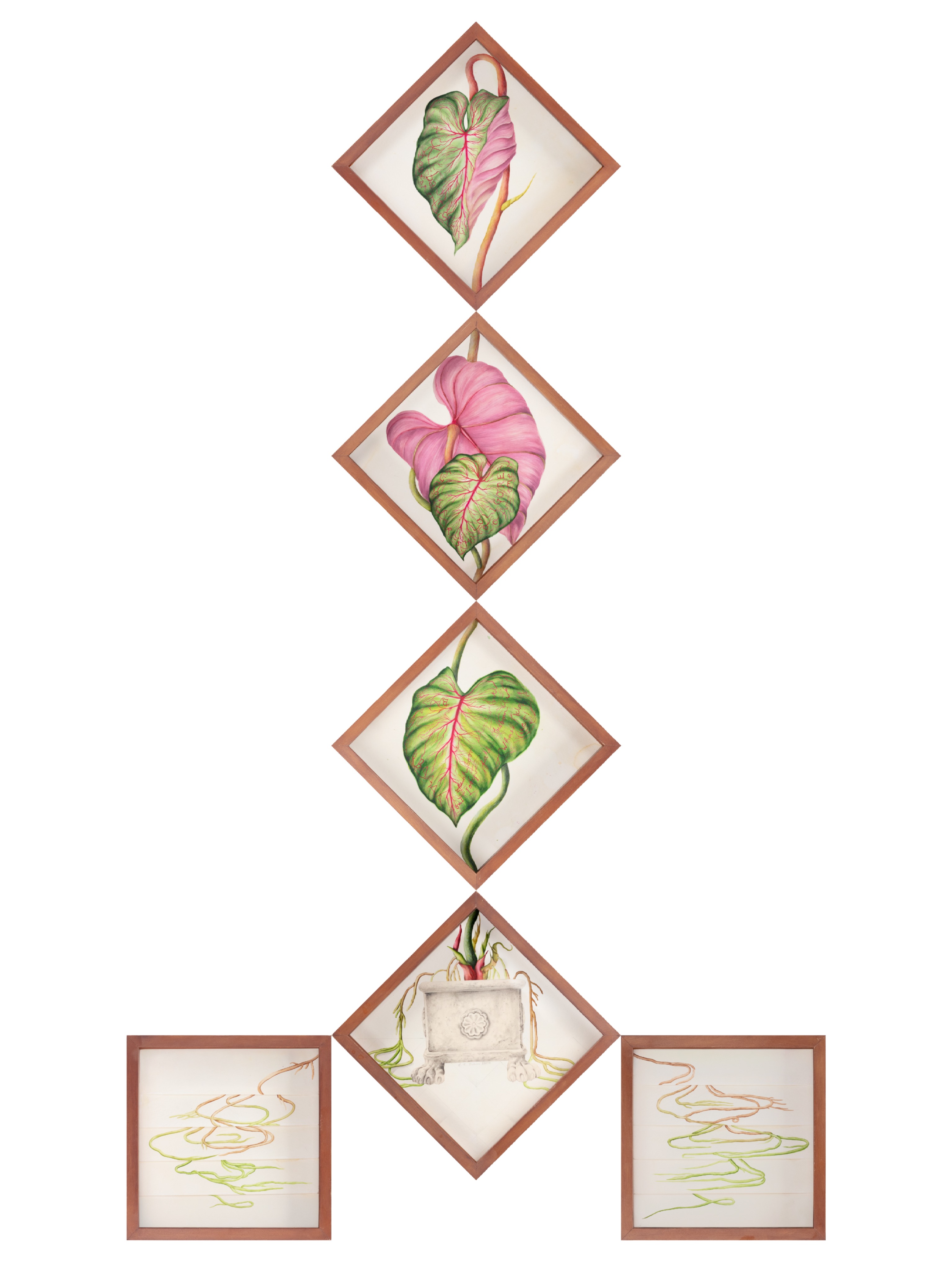
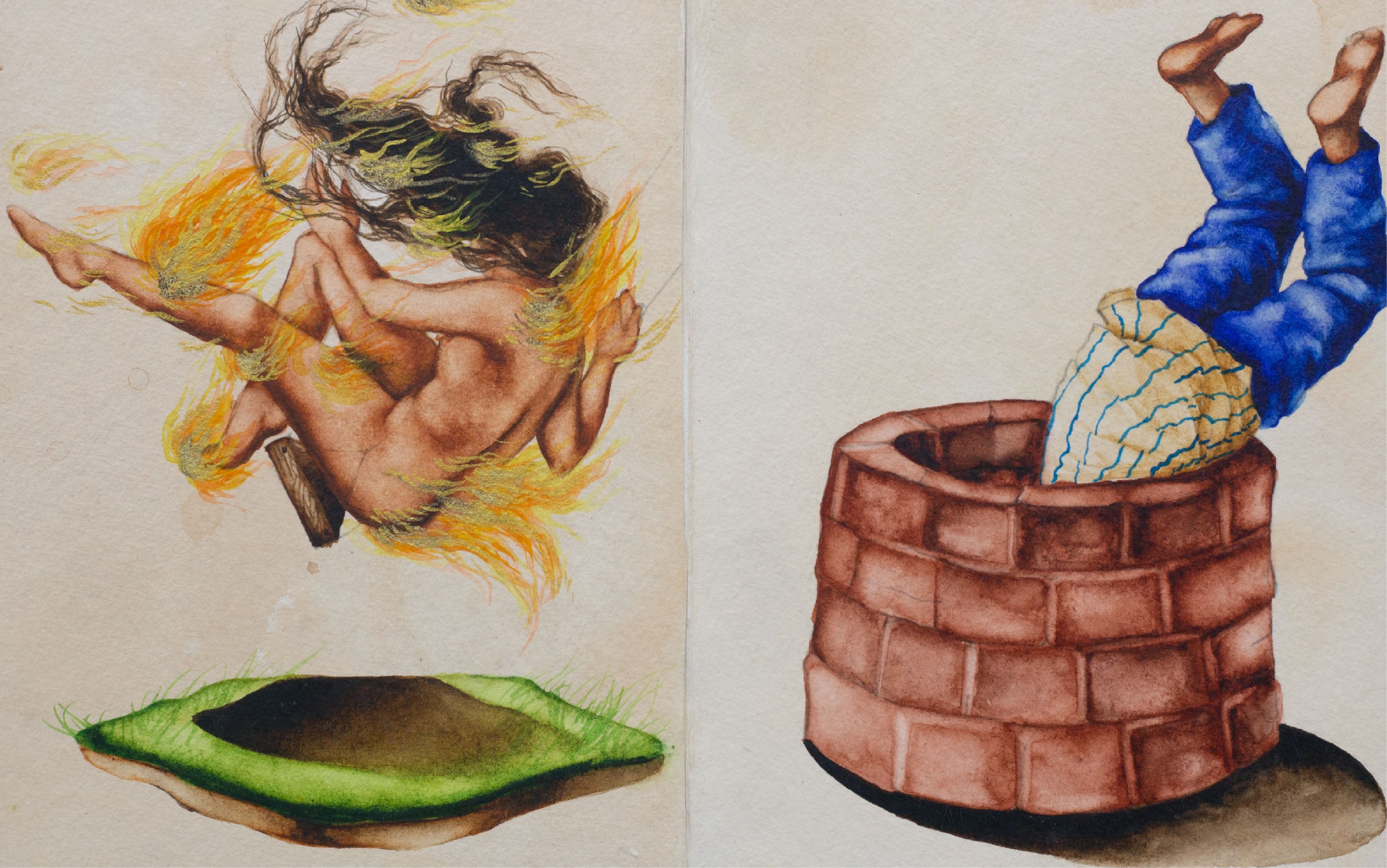
AM I SICK OR AM I CRAZY OR AM I JUST FUCKING DYINGGG? (System is Nervous)
2026
18164
2
watercolor on paper, 6-panel polyptych
62.8h x 36.22w x 2.36d in • 159.5h x 92w x 6d cm (overall)
-1
0.00
PHP
0
Details
Liv Vinluan
Bb. Simplicia Saguil
2026
18163
2
oil on canvas, 11-panel polyptych
77.56h x 83.86w x 2.76d in • 197h x 213w x 7d cm (overall), 11.81dia x 1.18d in • 30dia x 3d cm (sphere)
-1
0.00
PHP
0
Details

Installation Views

PHA+PHN0cm9uZz5TSUxWRVJMRU5TPC9zdHJvbmc+IGlzIGNvbW1pdHRlZCB0byBwcm90ZWN0aW5nIHlvdXIgcHJpdmFjeS4gSW4gY29tcGxpYW5jZSB3aXRoIHRoZSBQaGlsaXBwaW5lIFJlcHVibGljIEFjdCwgTm8uIDEwMTczIGJldHRlciBrbm93biBhcyB0aGUgMjAxMiBEYXRhIFByaXZhY3kgQWN0LCB3ZSBjYW4gb25seSB1c2UgdGhlIGluZm9ybWF0aW9uIHRoYXQgd2Ugb2J0YWluIGFib3V0IHlvdSBsYXdmdWxseS4gV2UgbWF5IGNvbGxlY3QgcGVyc29uYWwgaW5mb3JtYXRpb24gYWJvdXQgeW91IHdoZW4geW91IHNpZ24gdXAgZm9yIG91ciBuZXdzbGV0dGVyIG9yIGNvbnRhY3QgdXMgd2l0aCBhbiBpbnF1aXJ5LjwvcD4KPHA+VGhlIHR5cGUgb2YgaW5mb3JtYXRpb24gd2UgbWF5IGNvbGxlY3QgaW5jbHVkZXMgeW91ciA8c3Ryb25nPk5hbWU8L3N0cm9uZz4sIDxzdHJvbmc+RW1haWw8L3N0cm9uZz4sIGFuZCA8c3Ryb25nPkNvbnRhY3QgTnVtYmVyPC9zdHJvbmc+LjwvcD4KPHA+V2UgbWF5IGNvbGxlY3QgcGF5bWVudCBpbmZvcm1hdGlvbiBmcm9tIHlvdSB0byBmdWxmaWxsIHRyYW5zYWN0aW9ucy4gVG8gcHJvY2VzcyBwYXltZW50cywgd2UgbWF5IGNvbGxlY3QgeW91ciBjcmVkaXQgY2FyZCBhbmQgYmFuayBhY2NvdW50IGRldGFpbHMuIFRoaXMgaW5mb3JtYXRpb24gbWF5IGJlIHNoYXJlZCB3aXRoIHRoaXJkIHBhcnR5IHBheW1lbnQgcHJvY2Vzc2luZyBzZXJ2aWNlcy48L3A+CjxwPlRvIGRlbGl2ZXIgeW91ciBwdXJjaGFzZSwgd2UgbWF5IHByb3ZpZGUgeW91ciBwZXJzb25hbCBpbmZvcm1hdGlvbiB0byB0aGlyZC1wYXJ0eSBsb2dpc3RpY3MgY29tcGFuaWVzIHdobyBhc3Npc3QgdXMgd2l0aCBvdXIgZGVsaXZlcmllcyBhbmQgc2hpcG1lbnRzLjwvcD4KPHA+VGhlIHBlcnNvbmFsIGluZm9ybWF0aW9uIHdoaWNoIHdlIGhvbGQgd2lsbCBiZSBoZWxkIHNlY3VyZWx5IGluIGFjY29yZGFuY2Ugd2l0aCBvdXIgaW50ZXJuYWwgc2VjdXJpdHkgcG9saWN5LiBXZSB3aWxsIG5ldmVyIGNvbGxlY3QgaW5mb3JtYXRpb24gYWJvdXQgeW91IHdpdGhvdXQgeW91ciBleHBsaWNpdCBjb25zZW50LjwvcD4KPHA+VGhlIGluZm9ybWF0aW9uIHdlIHN0b3JlIHdpbGwgYmUgYWNjdXJhdGUgYW5kIHVwIHRvIGRhdGUuIFlvdSBjYW4gY2hlY2sgdGhlIGluZm9ybWF0aW9uIHRoYXQgd2UgaG9sZCBhYm91dCB5b3UgYnkgZW1haWxpbmcgdXMuIElmIHlvdSBmaW5kIHRoYXQgdGhlcmUgYXJlIGFueSBpbmFjY3VyYWNpZXMsIHdlIHdpbGwgZGVsZXRlIG9yIGNvcnJlY3QgaXQgcHJvbXB0bHkuPC9wPgo8cD5XZSBtYXkgdXNlIHRlY2hub2xvZ3kgdG8gdHJhY2sgdGhlIHBhdHRlcm5zIG9mIGJlaGF2aW9yIG9mIHZpc2l0b3JzIHRvIG91ciB3ZWJzaXRlLiBUaGlzIG1heSBpbmNsdWRlIHVzaW5nIGEgImNvb2tpZSIgc3RvcmVkIG9uIHlvdXIgYnJvd3NlciB3aGljaCB5b3UgY2FuIHVzdWFsbHkgbW9kaWZ5IHRocm91Z2ggeW91ciBicm93c2VyIHRvIHByZXZlbnQgdGhpcyBmcm9tIGhhcHBlbmluZy48L3A+CjxwPldlIHdpbGwgcmV0YWluIHlvdXIgcGVyc29uYWwgaW5mb3JtYXRpb24gb25seSB3aGlsZSB3ZSBuZWVkIGl0IGZvciB0aGUgcmVhc29ucyBzdGF0ZWQgYWJvdmUgb3IgdW50aWwgeW91IHJlcXVlc3QgdGhhdCB3ZSBkZWxldGUgaXQgb24gb3VyIHJlY29yZHMuPC9wPgo8cD5JZiB5b3UgaGF2ZSBhbnkgcXVlc3Rpb25zIG9yIGNvbW1lbnRzIGFib3V0IG91ciBwcml2YWN5LCBwbGVhc2UgY29udGFjdCB1cyBhdCA8YSBocmVmPSJtYWlsdG86aW5xdWlyeUBzaWx2ZXJsZW5zZ2FsbGVyaWVzLmNvbSI+aW5xdWlyeUBzaWx2ZXJsZW5zZ2FsbGVyaWVzLmNvbTwvYT48L3A+
R2FpbiBhY2Nlc3MgdG8gZXhjbHVzaXZlIGdhbGxlcnkgaW5mb3JtYXRpb24sIGxhdGVzdCBleGhpYml0aW9ucywgPGJyIC8+CmFuZCBhcnRpc3QgdXBkYXRlcyBieSBzaWduaW5nIHVwIGZvciBvdXIgbmV3c2xldHRlciBiZWxvdy4=