Art Basel 2026

Pacita Abad, Nicole Coson, Yee I-Lann, Geraldine Javier
Galleries Sector: Booth L13 Messe Basel, Messeplatz 10 | Parcours Sector: KLARA Clarastrasse 13, 4058 Basel | Preview: 16–17 June 2026, Public Days: 18–21 June 2026

About

    Silverlens returns for the 2026 edition of Art Basel in Basel with works by four intergenerational Southeast Asian artists, presented across the main fair and Parcours sector: Pacita Abad, Nicole Coson, Geraldine Javier, and Yee I-Lann. For each artist, materials exceed themselves: a tablecloth becomes a painting, a shipping container becomes a printing tool, 267 paintings hide inside a volcano's silhouette, a woven mat becomes a counter to the colonial table. A five-minute walk from the fair, Nicole Coson presents a suspended installation of aluminum-cast oyster shells as part of the Parcours sector for public art.


    Galleries Sector
    Presenting: Pacita Abad, Nicole Coson, Geraldine Javier, and Yee I-Lann
    Booth L13

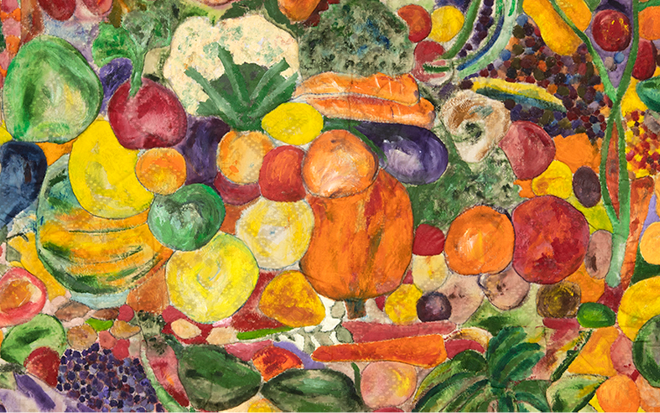
    Pacita Abad (b. 1946, Batanes, Philippines, d. 2004, Singapore) spent thirty years in near-constant motion across borders. She is best known for her trapuntos, richly layered, hand-quilted canvases that pull from folk traditions across the cultures she passed through. Silverlens presents the first one she ever made, the inception to her now iconic practice. Baguio Fruit (1981) began as a tablecloth. When Abad's husband spilled red wine on it, she turned it into a painting, a tribute to Baguio, a city in the Philippine highlands known for its produce. Alongside it, a group of paintings from Abad's years in Indonesia in the 1990s: Anemone (1992), an early oil-and-acrylic of a kencana flower in vivid purple, and a series of smaller floral works in original Balinese wooden frames selected by the artist.

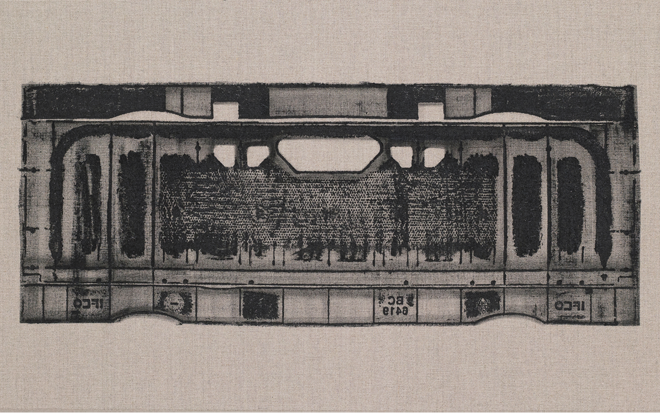
    Nicole Coson (b. 1992, Manila, Philippines; lives and works in London, UK) makes quiet paintings by inking real shipping container doors and pressing them onto raw canvas with her body. Smaller works are printed from the plastic crates that carry exoticized vegetables through London's East End markets. In both, the scale, the texture, the weight of vessels built to move capital and culture across trade routes transfers near photographically, the hard industrial surface and the pressure of the artist's body recorded together. The same concerns continue in her Parcours installation, a short walk from the fair.

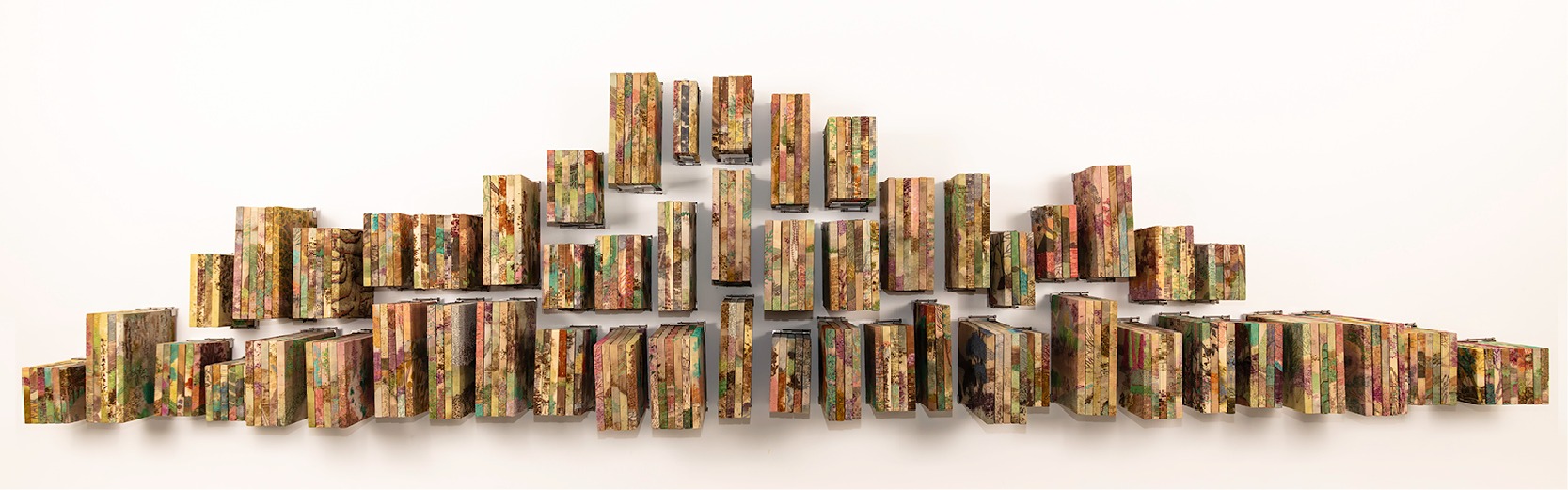
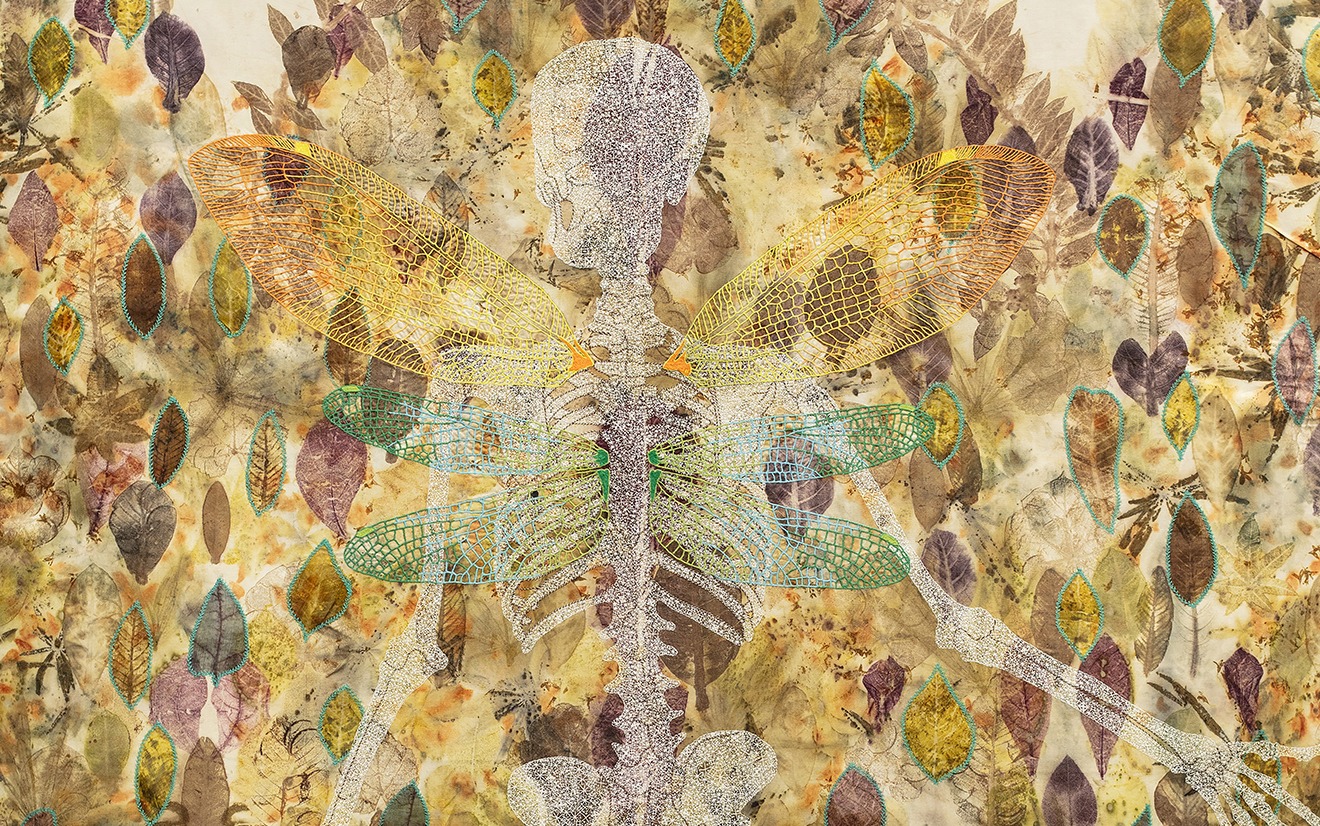
    Together with collaborators from her community, Geraldine Javier (b. 1970, Makati City, Philippines; lives and works in Batangas, Philippines) farms hundreds of plant species, which they "eco-print" onto textile and overlay with intricate hand embroidery, generating real employment opportunities in the process. At Art Basel, Javier presents Mt. Maculot. "All that you touch, you change. All that you change, changes you." (Octavia E. Butler) (2025): 267 eco-printed and embroidered paintings installed in the silhouette of a volcano in Batangas, which took six months and eleven people to construct. Viewers see only the spines, their faces hidden like books in a library whose covers cannot be opened. Also on view, are collaged tapestries from her Shades of Grey series (2025). In September 2026, Javier presents her first solo exhibition in the United States at Silverlens New York.

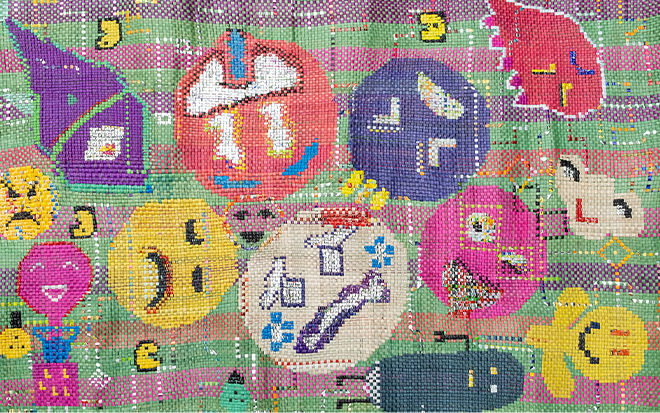
    Yee I-Lann (b. 1971, Sabah, Malaysia; lives in Kota Kinabalu, Malaysia) debuts a new series of tikar, or woven mats, made collaboratively with the Dusun and Murut weavers of Sabah. The mat itself is a form of political resistance. Used across Southeast Asia for thousands of years, it is an egalitarian, floor-level space for gathering, a direct counter to the colonial table, with its hierarchies of seating and power. Yee’s newest tikar introduce woven imagery of boxes, structures built to contain and separate. "Unfold the box," says the artist, "and you make a mat that holds us all." The box imagery is composed of woven pixels in a sly reference to Conway's ‘Game of Life’, an early computer simulation in which simple cells generate infinitely complex outcomes, a metaphor for inheritance and the decentralization of power.

    Parcours Sector: Nicole Coson
    Located in KLARA, Clarastrasse 13, 4058 Basel, Switzerland

    Curated by Stefanie Hessler, Director of the Swiss Institute in New York, Parcours is Art Basel’s public art sector where installations are spread throughout the city of Basel. Located in the basement of the KLARA food court, a five minute walk from the main fair, Nicole Coson exhibits Some place, within here (2024), a towering installation featuring aluminum-cast Aklan oyster shells threaded between interlocking metal loops hanging from the ceiling. The work explicitly mimics the structures used to aquafarm oysters in Aklan, a Visayan province in the Philippines, where these mollusks are cultivated on bamboo grids, dangling beneath the ocean’s surface. As they age, the undercurrent leaves its record in rings on their shells, place and time made physical. The location is not incidental: KLARA is a food court where international cuisines meet, a daily enactment of the same movement of food and culture that Coson's work traces.

    The installation arrives in Basel following its presentation in Thresholds of Becoming, the 40th anniversary exhibition of esea contemporary, the UK's leading East and Southeast Asian art institution, where Coson was one of six invited artists exhibited.

    ABOUT PACITA ABAD
    Pacita Abad (b. 1946, Batanes, Philippines - d. 2004, Singapore, Singapore) is known for her large-scale quilted trapunto paintings characterized by vibrant color and accumulated materials. Marked by vivid colors and intricate materials, her expansive paintings span a broad spectrum of themes, drawn in form and concept from a number of ethnic traditions of craft and thought. From portraying tribal masks and social scenes to intricate underwater landscapes and abstract forms, Abad's work transcends borders. In 2023, Abad was the subject of a major retrospective exhibition on view at The Walker Art Center, which then traveled to SFMOMA, MoMA PS1, and Art Gallery Ontario. Her work has been featured in major solo and group exhibitions in Jakarta, Hong Kong, Manila, Bangkok, Singapore, Washington, D.C., and Boston, among others.

    ABOUT NICOLE COSON
    Nicole Coson (b. 1992, Manila) is a Filipino artist based in London. She holds an MFA in Painting from the Royal College of Art London and a BA in Fine art from Central Saint Martins. Working in printmaking, painting, and sculpture, Coson’s work explores the process of image-making as it pertains to personal memory, history, and material culture. Coson’s printed canvases oscillate delicately between surface and depth: by integrating symbolically-loaded found objects into the etching press, concrete material culture transforms into analog, indexical images through their negative imprint. This imagistic oscillation between pattern, image, and object is embraced by Coson to tell stories of family, history, and coloniality, but never in straight-forward ways: rather, the artist is deeply committed to the aesthetic politics of opacity and by extension, privacy, secrecy, and intimacy. Rather than alluding to a hidden meaning behind her barrier motifs (camouflage patterns, window blinds, woven baskets, food crates), Coson invites us to study them as such—barriers—and the critical potential of visual obfuscation.

    Coson’s work on canvas is supplemented by occasional culinary and publishing projects, such as the ongoing Food Stories: The Silkroad, where food is explored as a palimpsest of migration histories—of people, spices, and recipes. Coson was featured in Bloomberg New Contemporaries in 2020, and has since held solo exhibitions at Silverlens Galleries in Manila, Philippines and New York.

    ABOUT GERALDINE JAVIER
    Geraldine Javier (b. 1970 in Makati City, Philippines; lives and works in Batangas, Philippines) is one of the Philippines’ most important and collected contemporary artists. With a Nursing degree from the University of the Philippines, she took a second university degree in Fine Arts, and pursued an art practice. Since 1995, she has held more than 30 solo exhibitions in the Philippines, Malaysia, South Korea, Singapore, Germany, and China. From 1999 to 2003 she was a member of the Surrounded By Water collective. Her paintings were characterized by either melancholy or wit: death and childhood were frequent subject matters. By 2008, she was making fabric works with the paintings and combining them in installations; exhibitions were a mixture of paintings, installations and objects. Paintings would often have collaged elements, notably preserved beetles and butterflies. In 2013, she moved south from Manila to the countryside in the district of Batangas. Her work increasingly dealt with our relationship with nature. Javier recently participated in the 2025 Helsinki Biennial, 2023 Sao Paulo Biennial and the 2019 Havana Biennial. Javier also presented a monumental piece for the Encounters sector at Art Basel Hong Kong in 2026.

    ABOUT YEE I-LANN
    Yee I-Lann (b. 1971, Kota Kinabalu, Sabah, Malaysia; lives and works in Kota Kinabalu) is a leading contemporary artist recognized for her predominantly photomedia-based practice. With acuity and wit, her digital practice delves into the evolving intersection of power, colonialism, and neo-colonialism in Southeast Asia, shedding light on the influence of historical memory in social experiences. 

    Yee has exhibited widely, with notable retrospectives including Yee I-Lann: Mansau-Ansau at Singapore Art Museum (2024) and the Thun Art Museum, Switzerland (2025); Yee I-Lann: 2005-2016, Ayala Museum, Manila, Philippines; and Fluid World, Contemporary Art Centre of South Australia, Adelaide, Australia (2011). Selected recent solo exhibitions include: TIKAR/MEJA/PLASTIK, Berkeley Art Museum & Pacific Film Archive, San Francisco, US (2024); At the Roof of the Mouth, Silverlens New York (2022); and Yee I-Lann: Until We Hug Again, Centre for Heritage, Arts & Textile, Hong Kong (2021). In 2023, she worked with RogueArt and six spaces in the city to mount the project Borneo Heart in Kuala Lumpur, with support from Silverlens.
Silverlens returns for the 2026 edition of Art Basel in Basel with works by four intergenerational Southeast Asian artists, presented across the main fair and Parcours sector: Pacita Abad, Nicole Coson, Geraldine Javier, and Yee I-Lann. For each artist, materials exceed themselves: a tablecloth becomes a painting, a shipping container becomes a printing tool, 267 paintings hide inside a volcano's silhouette, a woven mat becomes a counter to the colonial table. A five-minute walk from the fair, Nicole Coson presents a suspended installation of aluminum-cast oyster shells as part of the Parcours sector for public art.


Galleries Sector
Presenting: Pacita Abad, Nicole Coson, Geraldine Javier, and Yee I-Lann
Booth L13

Pacita Abad (b. 1946, Batanes, Philippines, d. 2004, Singapore) spent thirty years in near-constant motion across borders. She is best known for her trapuntos, richly layered, hand-quilted canvases that pull from folk traditions across the cultures she passed through. Silverlens presents the first one she ever made, the inception to her now iconic practice. Baguio Fruit (1981) began as a tablecloth. When Abad's husband spilled red wine on it, she turned it into a painting, a tribute to Baguio, a city in the Philippine highlands known for its produce. Alongside it, a group of paintings from Abad's years in Indonesia in the 1990s: Anemone (1992), an early oil-and-acrylic of a kencana flower in vivid purple, and a series of smaller floral works in original Balinese wooden frames selected by the artist.

Nicole Coson (b. 1992, Manila, Philippines; lives and works in London, UK) makes quiet paintings by inking real shipping container doors and pressing them onto raw canvas with her body. Smaller works are printed from the plastic crates that carry exoticized vegetables through London's East End markets. In both, the scale, the texture, the weight of vessels built to move capital and culture across trade routes transfers near photographically, the hard industrial surface and the pressure of the artist's body recorded together. The same concerns continue in her Parcours installation, a short walk from the fair.

Together with collaborators from her community, Geraldine Javier (b. 1970, Makati City, Philippines; lives and works in Batangas, Philippines) farms hundreds of plant species, which they "eco-print" onto textile and overlay with intricate hand embroidery, generating real employment opportunities in the process. At Art Basel, Javier presents Mt. Maculot. "All that you touch, you change. All that you change, changes you." (Octavia E. Butler) (2025): 267 eco-printed and embroidered paintings installed in the silhouette of a volcano in Batangas, which took six months and eleven people to construct. Viewers see only the spines, their faces hidden like books in a library whose covers cannot be opened. Also on view, are collaged tapestries from her Shades of Grey series (2025). In September 2026, Javier presents her first solo exhibition in the United States at Silverlens New York.

Yee I-Lann (b. 1971, Sabah, Malaysia; lives in Kota Kinabalu, Malaysia) debuts a new series of tikar, or woven mats, made collaboratively with the Dusun and Murut weavers of Sabah. The mat itself is a form of political resistance. Used across Southeast Asia for thousands of years, it is an egalitarian, floor-level space for gathering, a direct counter to the colonial table, with its hierarchies of seating and power. Yee’s newest tikar introduce woven imagery of boxes, structures built to contain and separate. "Unfold the box," says the artist, "and you make a mat that holds us all." The box imagery is composed of woven pixels in a sly reference to Conway's ‘Game of Life’, an early computer simulation in which simple cells generate infinitely complex outcomes, a metaphor for inheritance and the decentralization of power.

Parcours Sector: Nicole Coson
Located in KLARA, Clarastrasse 13, 4058 Basel, Switzerland

Curated by Stefanie Hessler, Director of the Swiss Institute in New York, Parcours is Art Basel’s public art sector where installations are spread throughout the city of Basel. Located in the basement of the KLARA food court, a five minute walk from the main fair, Nicole Coson exhibits Some place, within here (2024), a towering installation featuring aluminum-cast Aklan oyster shells threaded between interlocking metal loops hanging from the ceiling. The work explicitly mimics the structures used to aquafarm oysters in Aklan, a Visayan province in the Philippines, where these mollusks are cultivated on bamboo grids, dangling beneath the ocean’s surface. As they age, the undercurrent leaves its record in rings on their shells, place and time made physical. The location is not incidental: KLARA is a food court where international cuisines meet, a daily enactment of the same movement of food and culture that Coson's work traces.

The installation arrives in Basel following its presentation in Thresholds of Becoming, the 40th anniversary exhibition of esea contemporary, the UK's leading East and Southeast Asian art institution, where Coson was one of six invited artists exhibited.

ABOUT PACITA ABAD
Pacita Abad (b. 1946, Batanes, Philippines - d. 2004, Singapore, Singapore) is known for her large-scale quilted trapunto paintings characterized by vibrant color and accumulated materials. Marked by vivid colors and intricate materials, her expansive paintings span a broad spectrum of themes, drawn in form and concept from a number of ethnic traditions of craft and thought. From portraying tribal masks and social scenes to intricate underwater landscapes and abstract forms, Abad's work transcends borders. In 2023, Abad was the subject of a major retrospective exhibition on view at The Walker Art Center, which then traveled to SFMOMA, MoMA PS1, and Art Gallery Ontario. Her work has been featured in major solo and group exhibitions in Jakarta, Hong Kong, Manila, Bangkok, Singapore, Washington, D.C., and Boston, among others.

ABOUT NICOLE COSON
Nicole Coson (b. 1992, Manila) is a Filipino artist based in London. She holds an MFA in Painting from the Royal College of Art London and a BA in Fine art from Central Saint Martins. Working in printmaking, painting, and sculpture, Coson’s work explores the process of image-making as it pertains to personal memory, history, and material culture. Coson’s printed canvases oscillate delicately between surface and depth: by integrating symbolically-loaded found objects into the etching press, concrete material culture transforms into analog, indexical images through their negative imprint. This imagistic oscillation between pattern, image, and object is embraced by Coson to tell stories of family, history, and coloniality, but never in straight-forward ways: rather, the artist is deeply committed to the aesthetic politics of opacity and by extension, privacy, secrecy, and intimacy. Rather than alluding to a hidden meaning behind her barrier motifs (camouflage patterns, window blinds, woven baskets, food crates), Coson invites us to study them as such—barriers—and the critical potential of visual obfuscation.

Coson’s work on canvas is supplemented by occasional culinary and publishing projects, such as the ongoing Food Stories: The Silkroad, where food is explored as a palimpsest of migration histories—of people, spices, and recipes. Coson was featured in Bloomberg New Contemporaries in 2020, and has since held solo exhibitions at Silverlens Galleries in Manila, Philippines and New York.

ABOUT GERALDINE JAVIER
Geraldine Javier (b. 1970 in Makati City, Philippines; lives and works in Batangas, Philippines) is one of the Philippines’ most important and collected contemporary artists. With a Nursing degree from the University of the Philippines, she took a second university degree in Fine Arts, and pursued an art practice. Since 1995, she has held more than 30 solo exhibitions in the Philippines, Malaysia, South Korea, Singapore, Germany, and China. From 1999 to 2003 she was a member of the Surrounded By Water collective. Her paintings were characterized by either melancholy or wit: death and childhood were frequent subject matters. By 2008, she was making fabric works with the paintings and combining them in installations; exhibitions were a mixture of paintings, installations and objects. Paintings would often have collaged elements, notably preserved beetles and butterflies. In 2013, she moved south from Manila to the countryside in the district of Batangas. Her work increasingly dealt with our relationship with nature. Javier recently participated in the 2025 Helsinki Biennial, 2023 Sao Paulo Biennial and the 2019 Havana Biennial. Javier also presented a monumental piece for the Encounters sector at Art Basel Hong Kong in 2026.

ABOUT YEE I-LANN
Yee I-Lann (b. 1971, Kota Kinabalu, Sabah, Malaysia; lives and works in Kota Kinabalu) is a leading contemporary artist recognized for her predominantly photomedia-based practice. With acuity and wit, her digital practice delves into the evolving intersection of power, colonialism, and neo-colonialism in Southeast Asia, shedding light on the influence of historical memory in social experiences. 

Yee has exhibited widely, with notable retrospectives including Yee I-Lann: Mansau-Ansau at Singapore Art Museum (2024) and the Thun Art Museum, Switzerland (2025); Yee I-Lann: 2005-2016, Ayala Museum, Manila, Philippines; and Fluid World, Contemporary Art Centre of South Australia, Adelaide, Australia (2011). Selected recent solo exhibitions include: TIKAR/MEJA/PLASTIK, Berkeley Art Museum & Pacific Film Archive, San Francisco, US (2024); At the Roof of the Mouth, Silverlens New York (2022); and Yee I-Lann: Until We Hug Again, Centre for Heritage, Arts & Textile, Hong Kong (2021). In 2023, she worked with RogueArt and six spaces in the city to mount the project Borneo Heart in Kuala Lumpur, with support from Silverlens.
PHA+PHN0cm9uZz5TSUxWRVJMRU5TPC9zdHJvbmc+IGlzIGNvbW1pdHRlZCB0byBwcm90ZWN0aW5nIHlvdXIgcHJpdmFjeS4gSW4gY29tcGxpYW5jZSB3aXRoIHRoZSBQaGlsaXBwaW5lIFJlcHVibGljIEFjdCwgTm8uIDEwMTczIGJldHRlciBrbm93biBhcyB0aGUgMjAxMiBEYXRhIFByaXZhY3kgQWN0LCB3ZSBjYW4gb25seSB1c2UgdGhlIGluZm9ybWF0aW9uIHRoYXQgd2Ugb2J0YWluIGFib3V0IHlvdSBsYXdmdWxseS4gV2UgbWF5IGNvbGxlY3QgcGVyc29uYWwgaW5mb3JtYXRpb24gYWJvdXQgeW91IHdoZW4geW91IHNpZ24gdXAgZm9yIG91ciBuZXdzbGV0dGVyIG9yIGNvbnRhY3QgdXMgd2l0aCBhbiBpbnF1aXJ5LjwvcD4KPHA+VGhlIHR5cGUgb2YgaW5mb3JtYXRpb24gd2UgbWF5IGNvbGxlY3QgaW5jbHVkZXMgeW91ciA8c3Ryb25nPk5hbWU8L3N0cm9uZz4sIDxzdHJvbmc+RW1haWw8L3N0cm9uZz4sIGFuZCA8c3Ryb25nPkNvbnRhY3QgTnVtYmVyPC9zdHJvbmc+LjwvcD4KPHA+V2UgbWF5IGNvbGxlY3QgcGF5bWVudCBpbmZvcm1hdGlvbiBmcm9tIHlvdSB0byBmdWxmaWxsIHRyYW5zYWN0aW9ucy4gVG8gcHJvY2VzcyBwYXltZW50cywgd2UgbWF5IGNvbGxlY3QgeW91ciBjcmVkaXQgY2FyZCBhbmQgYmFuayBhY2NvdW50IGRldGFpbHMuIFRoaXMgaW5mb3JtYXRpb24gbWF5IGJlIHNoYXJlZCB3aXRoIHRoaXJkIHBhcnR5IHBheW1lbnQgcHJvY2Vzc2luZyBzZXJ2aWNlcy48L3A+CjxwPlRvIGRlbGl2ZXIgeW91ciBwdXJjaGFzZSwgd2UgbWF5IHByb3ZpZGUgeW91ciBwZXJzb25hbCBpbmZvcm1hdGlvbiB0byB0aGlyZC1wYXJ0eSBsb2dpc3RpY3MgY29tcGFuaWVzIHdobyBhc3Npc3QgdXMgd2l0aCBvdXIgZGVsaXZlcmllcyBhbmQgc2hpcG1lbnRzLjwvcD4KPHA+VGhlIHBlcnNvbmFsIGluZm9ybWF0aW9uIHdoaWNoIHdlIGhvbGQgd2lsbCBiZSBoZWxkIHNlY3VyZWx5IGluIGFjY29yZGFuY2Ugd2l0aCBvdXIgaW50ZXJuYWwgc2VjdXJpdHkgcG9saWN5LiBXZSB3aWxsIG5ldmVyIGNvbGxlY3QgaW5mb3JtYXRpb24gYWJvdXQgeW91IHdpdGhvdXQgeW91ciBleHBsaWNpdCBjb25zZW50LjwvcD4KPHA+VGhlIGluZm9ybWF0aW9uIHdlIHN0b3JlIHdpbGwgYmUgYWNjdXJhdGUgYW5kIHVwIHRvIGRhdGUuIFlvdSBjYW4gY2hlY2sgdGhlIGluZm9ybWF0aW9uIHRoYXQgd2UgaG9sZCBhYm91dCB5b3UgYnkgZW1haWxpbmcgdXMuIElmIHlvdSBmaW5kIHRoYXQgdGhlcmUgYXJlIGFueSBpbmFjY3VyYWNpZXMsIHdlIHdpbGwgZGVsZXRlIG9yIGNvcnJlY3QgaXQgcHJvbXB0bHkuPC9wPgo8cD5XZSBtYXkgdXNlIHRlY2hub2xvZ3kgdG8gdHJhY2sgdGhlIHBhdHRlcm5zIG9mIGJlaGF2aW9yIG9mIHZpc2l0b3JzIHRvIG91ciB3ZWJzaXRlLiBUaGlzIG1heSBpbmNsdWRlIHVzaW5nIGEgImNvb2tpZSIgc3RvcmVkIG9uIHlvdXIgYnJvd3NlciB3aGljaCB5b3UgY2FuIHVzdWFsbHkgbW9kaWZ5IHRocm91Z2ggeW91ciBicm93c2VyIHRvIHByZXZlbnQgdGhpcyBmcm9tIGhhcHBlbmluZy48L3A+CjxwPldlIHdpbGwgcmV0YWluIHlvdXIgcGVyc29uYWwgaW5mb3JtYXRpb24gb25seSB3aGlsZSB3ZSBuZWVkIGl0IGZvciB0aGUgcmVhc29ucyBzdGF0ZWQgYWJvdmUgb3IgdW50aWwgeW91IHJlcXVlc3QgdGhhdCB3ZSBkZWxldGUgaXQgb24gb3VyIHJlY29yZHMuPC9wPgo8cD5JZiB5b3UgaGF2ZSBhbnkgcXVlc3Rpb25zIG9yIGNvbW1lbnRzIGFib3V0IG91ciBwcml2YWN5LCBwbGVhc2UgY29udGFjdCB1cyBhdCA8YSBocmVmPSJtYWlsdG86aW5xdWlyeUBzaWx2ZXJsZW5zZ2FsbGVyaWVzLmNvbSI+aW5xdWlyeUBzaWx2ZXJsZW5zZ2FsbGVyaWVzLmNvbTwvYT48L3A+
R2FpbiBhY2Nlc3MgdG8gZXhjbHVzaXZlIGdhbGxlcnkgaW5mb3JtYXRpb24sIGxhdGVzdCBleGhpYml0aW9ucywgPGJyIC8+CmFuZCBhcnRpc3QgdXBkYXRlcyBieSBzaWduaW5nIHVwIGZvciBvdXIgbmV3c2xldHRlciBiZWxvdy4=