About

Anyone who has observed the recycling of softer metals like aluminum or gold will be familiar with the moment when pieces from disparate objects—soda cans, furniture components, broken jewelry, old cookware—after being subjected to intense heat, begin to soften and lose their defined forms. Moments later, the parts closest to the heat source start to melt more rapidly, drawing together and converging while retaining fleeting traces of their original features.
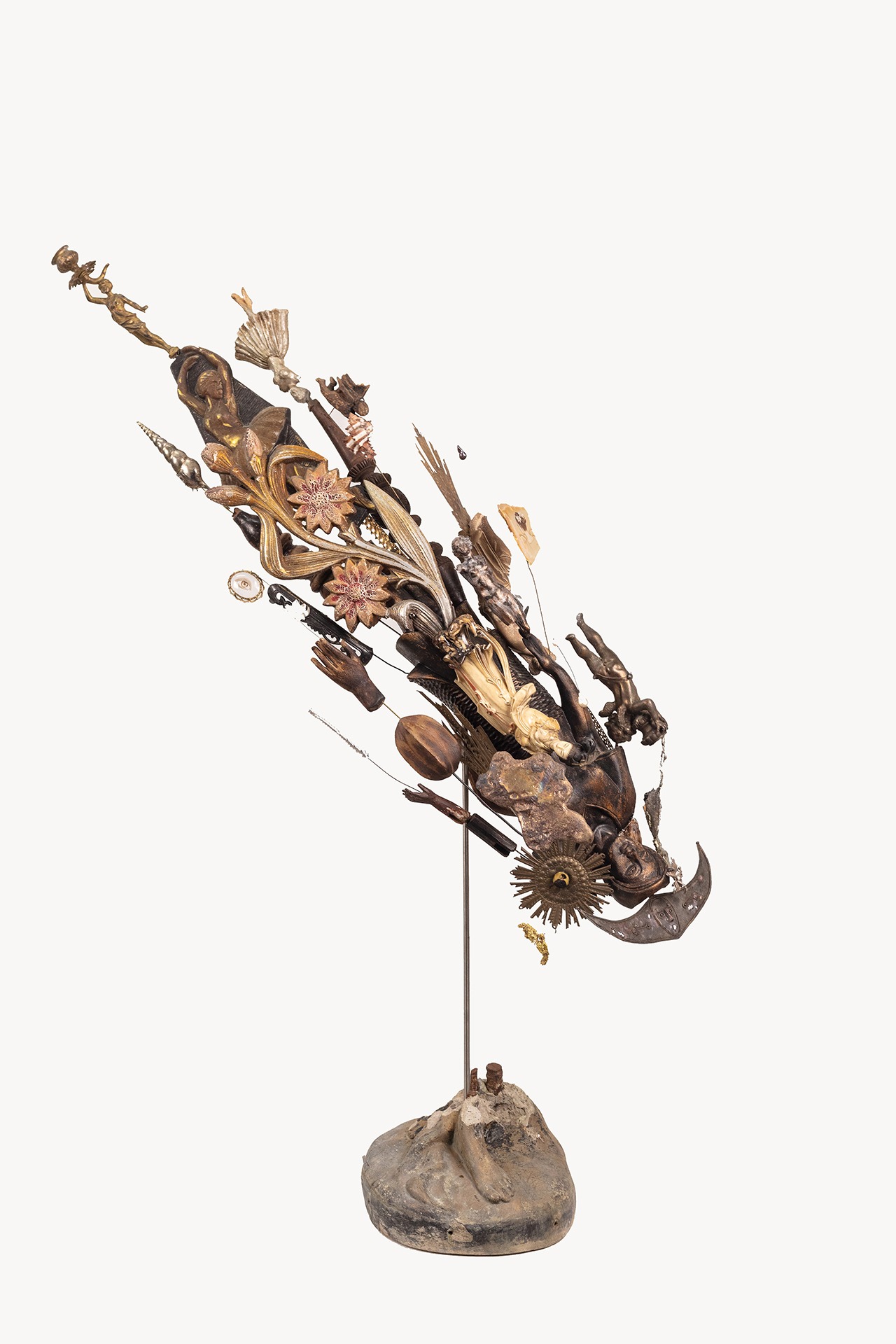
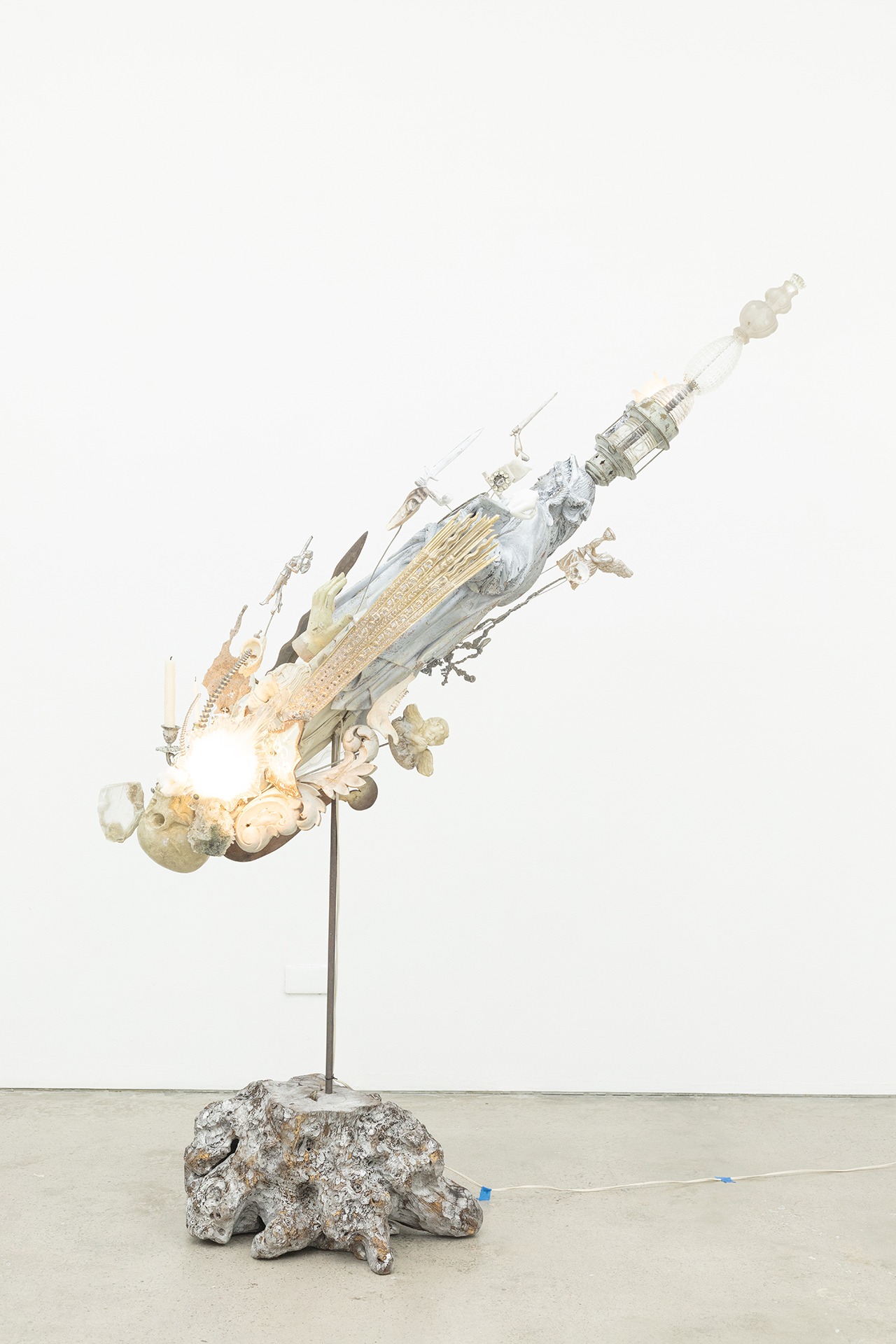
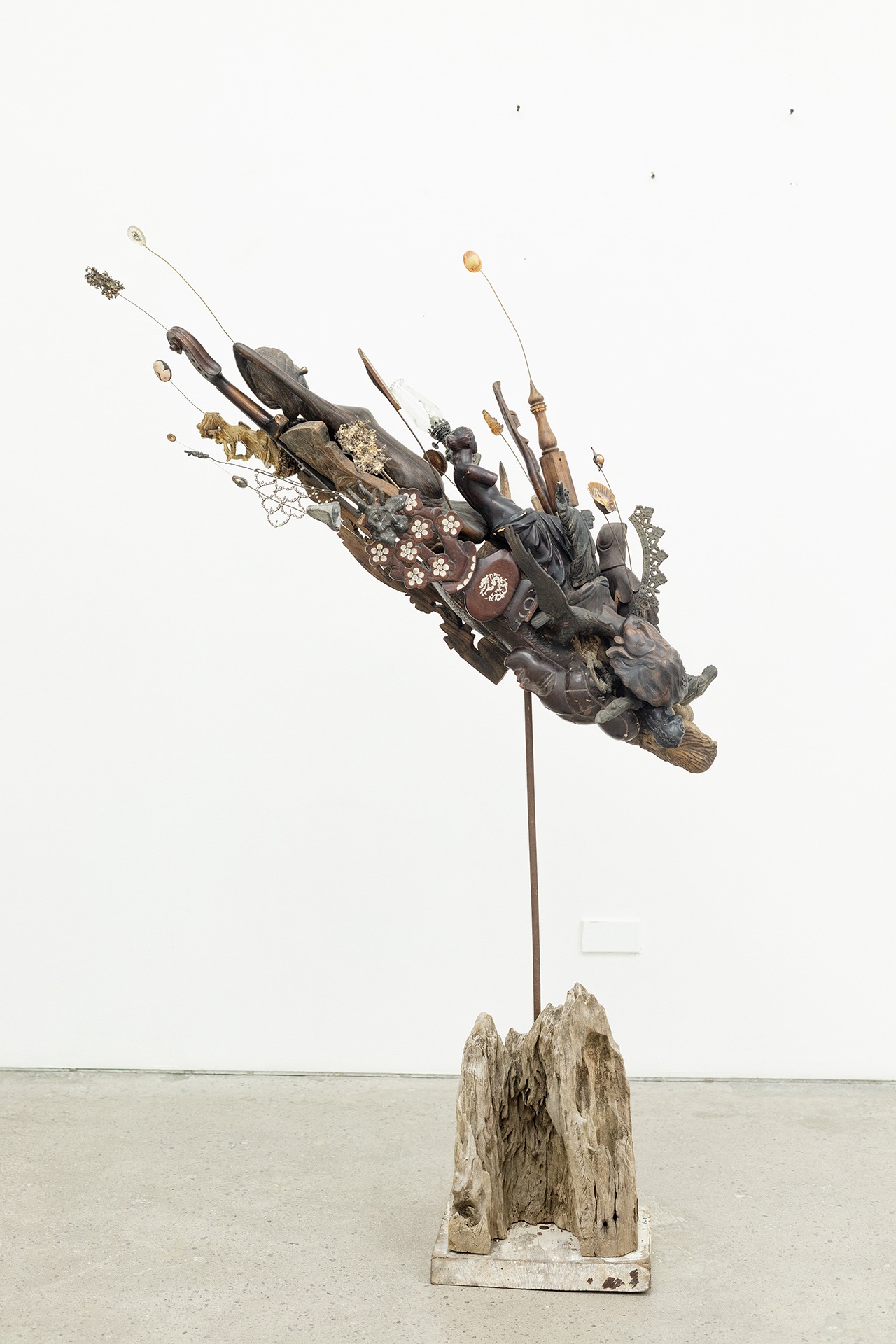
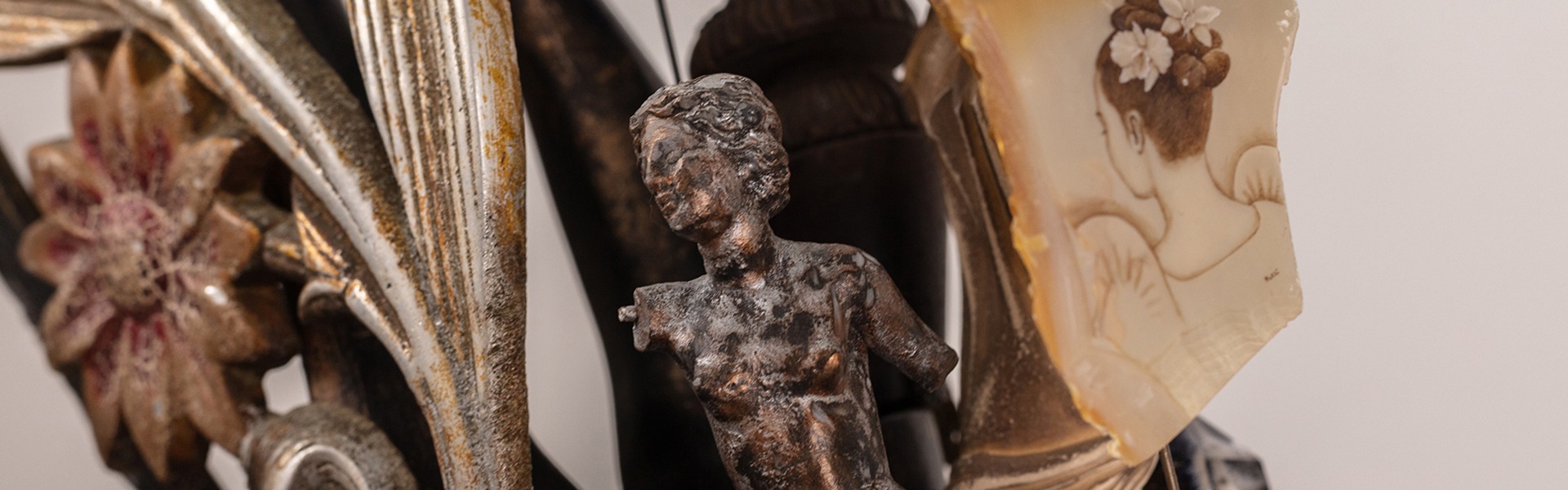
This momentary convergence of disparate elements echoes through Gregory Halili’s new sculptural pieces. He refers to them as comets, as their forms resemble dense, orbital bodies—clustered fragments suspended in a streaking motion. For those who have closely followed Halili’s decades-spanning artistic practice, this body of work may yet come as a surprise. Long celebrated for his delicate paintings on mother-of-pearl, his contemplative, meticulously detailed works build on the traditions of portraiture and landscape painting and sit at the crossroads of high craft and fine art. With this foundation, Halili approaches his sculptural works with the same care and attention to detail, extending the precision of the miniature outward, from the contained and intimate to the expansive, celestial. The shift in scale is mirrored by a shift in tools: the triple-zero detailing brush gives way to a 12mm industrial drill bit, the jeweler’s loupe to protective goggles.
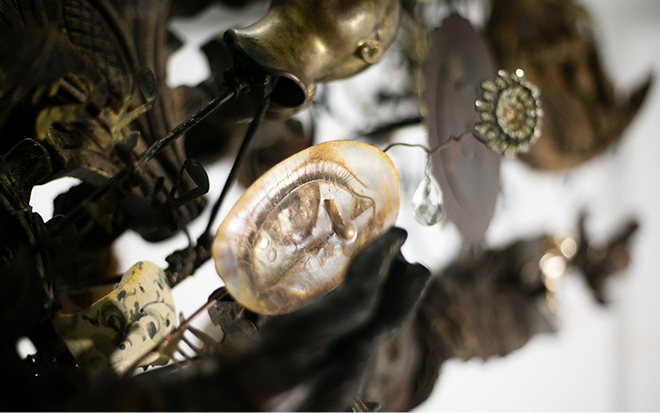
Made largely from objects sourced in thrift stores, Japanese surplus shops, and the antique markets of Bangkal, long known as a destination for collectors and bargain hunters, Halili breaks these objects down into pieces before reconfiguring them into new compositions. He emphasizes that his approach remains fundamentally painterly: adding a piece, stepping back, observing, and deciding what might enter the composition next. Built slowly over the course of months, the works are, at their core, assemblages and perhaps owe more to Joseph Cornell than to Bernini, even if the fragments themselves are taken from busts, wings, and drapery of decorative reproductions of classical sculpture.
Perhaps someone who follows design history may arrive at a different reading: the abundance of such objects could be seen as a moving away from neoclassical decorative tendencies, which for a time became the de facto design language of hotels, casinos, and mansions, as a legible signal of luxury and wealth. A quick look at real estate listings offers another clue. Many older properties on the market are described as Mediterranean-style, Spanish Colonial Revival, villa homes, complete with the requisite moldings, trimmings, wrought ironwork, furniture and garden features. Newly-built, or even pre-selling offerings, by contrast, are more often tagged as Modern/Contemporary, Zen, or Brutalist, characterized by hard edges, expansive glass windows, cold concrete, and stainless steel finishes. Taken at face value, this might suggest a strictly linear progression from the ornate to the minimal, rendering the need for such elaborate decorative objects obsolete. A longer view, however, suggests a more cyclical pattern: like seasons, or bodies in orbit, the impulse to adorn would in time rekindle and these objects will once again return to fashion. The antique shops will be all right.
Across different ancient cultures, comets were regarded as harbingers, their sudden appearance in the sky foretelling earthly troubles.
The first series of comet sculptures was shown at Silverlens (Manila) in 2022, in Halili’s solo exhibition Heavenly Bodies. For this initial set, he resisted the use of any practical light source. The new collection embraces the addition of light, placed thoughtfully within the entangled fragments, and only where it can intensify the sense of glowing heat and forward momentum. Here, Halili’s comets take on an ethereal quality, coming closer to the golden halos or resplandor found in religious iconography. Designed to imbue a radiant aura, these crowns or disks appear behind the head or body of a sacred figure, bathing it in divine light. In Halili’s hands, the gap between figure and illumination seemingly collapses, with torsos colliding with light fixtures, as if an altar or curio cabinet were sucked into orbit, shattered parts gaining velocity and propulsion, before slowly converging into a singular body.
Born under the uneasiness of the lockdown years, the comets began as experiments using materials already found in the artist’s home and studio. An avid collector of historical objects, plant specimens, and other artifacts, Halili’s affinity with the natural world mirrors that of an Enlightenment-era gentleman: energized by discovery, guided by experimentation, and driven by the desire to understand the world. In this light, his reference to José Rizal’s The Triumph of Science over Death and his use of the Statue of Liberty as material find their resonance. Like a time traveler moving across eras, Halili sifts through the remnants of the old world and carries back his discoveries, allowing what matters a way back into the present.
Words by Gary-Ross Pastrana
Gregory Halili (b. 1975, Manila, Philippines; lives and works in Manila) is an artist specializing in the intricate art of miniatures. He meticulously carves and paints mother-of-pearl shells, creating memento moris that capture contemporary concepts of memory, life, death, and cycles. Recently, he has broadened his practice to include miniature oil paintings. Transforming capiz shells into canvases, he delicately presses them to their most fragile state, nearly reaching the point of breaking. These thinned-down, glass- like pieces, featuring paintings of butterflies and moths on the reverse, offer a reflection on the intricate and fragile state of the environment and the future. After 25 years in the United States, he returned to the Philippines in 2013.
His work has appeared in numerous exhibitions and shows, including the John Michael Kohler Arts Center in Sheboygan, Wisconsin; The Butler Institute of American Art in Youngstown, Ohio; The Hammond Museum and Sculpture Garden in Salem, New York; Ayala Museum in Makati City; Jorge B. Vargas Museum at the University of the Philippines in Quezon City; West Gallery in Quezon City; Silverlens in Makati City and Nancy Hoffman gallery in New York. In 2016, Halili presented at the Singapore Biennale. Halili received his B.F.A. from the University of the Arts in Philadelphia.
Works
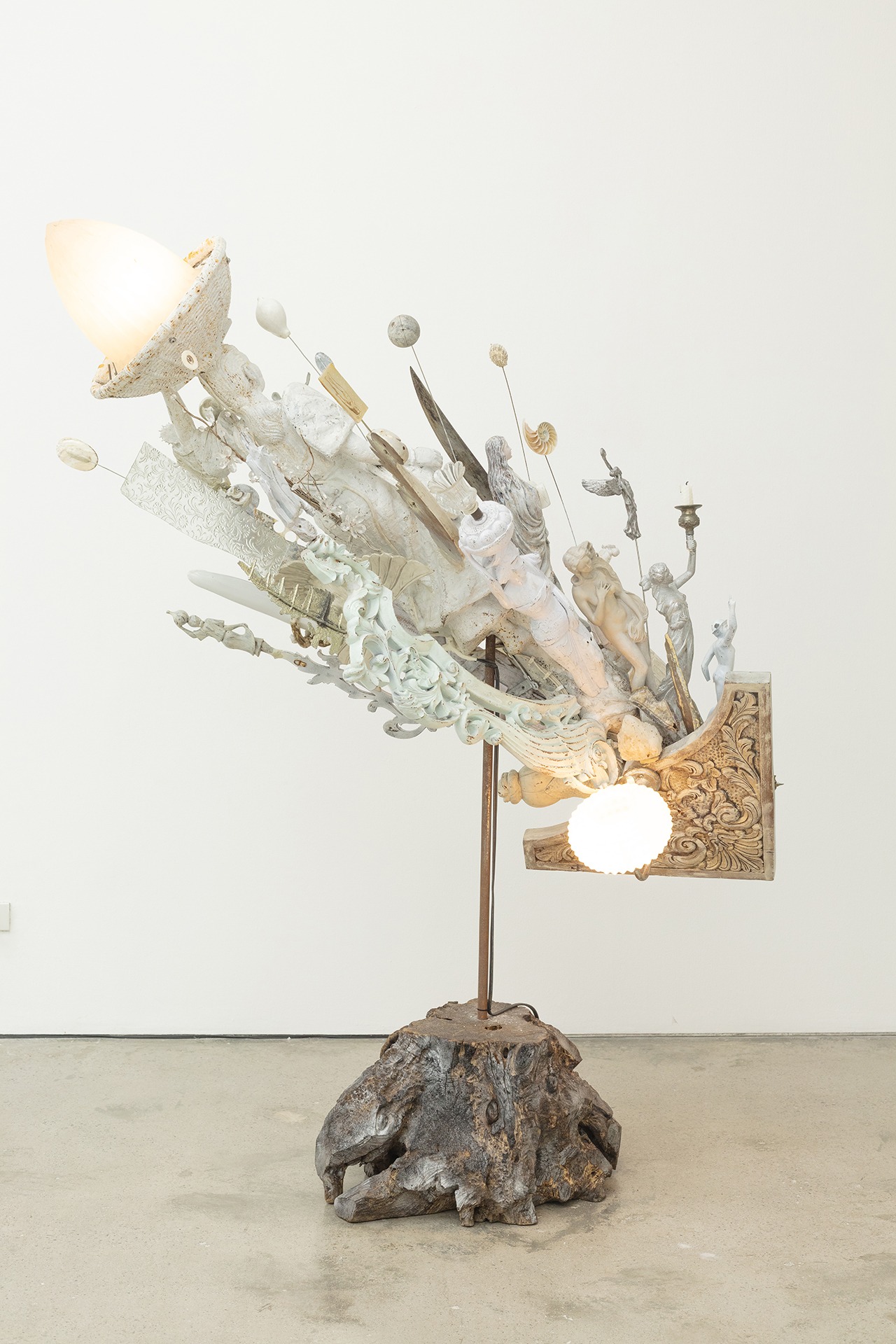

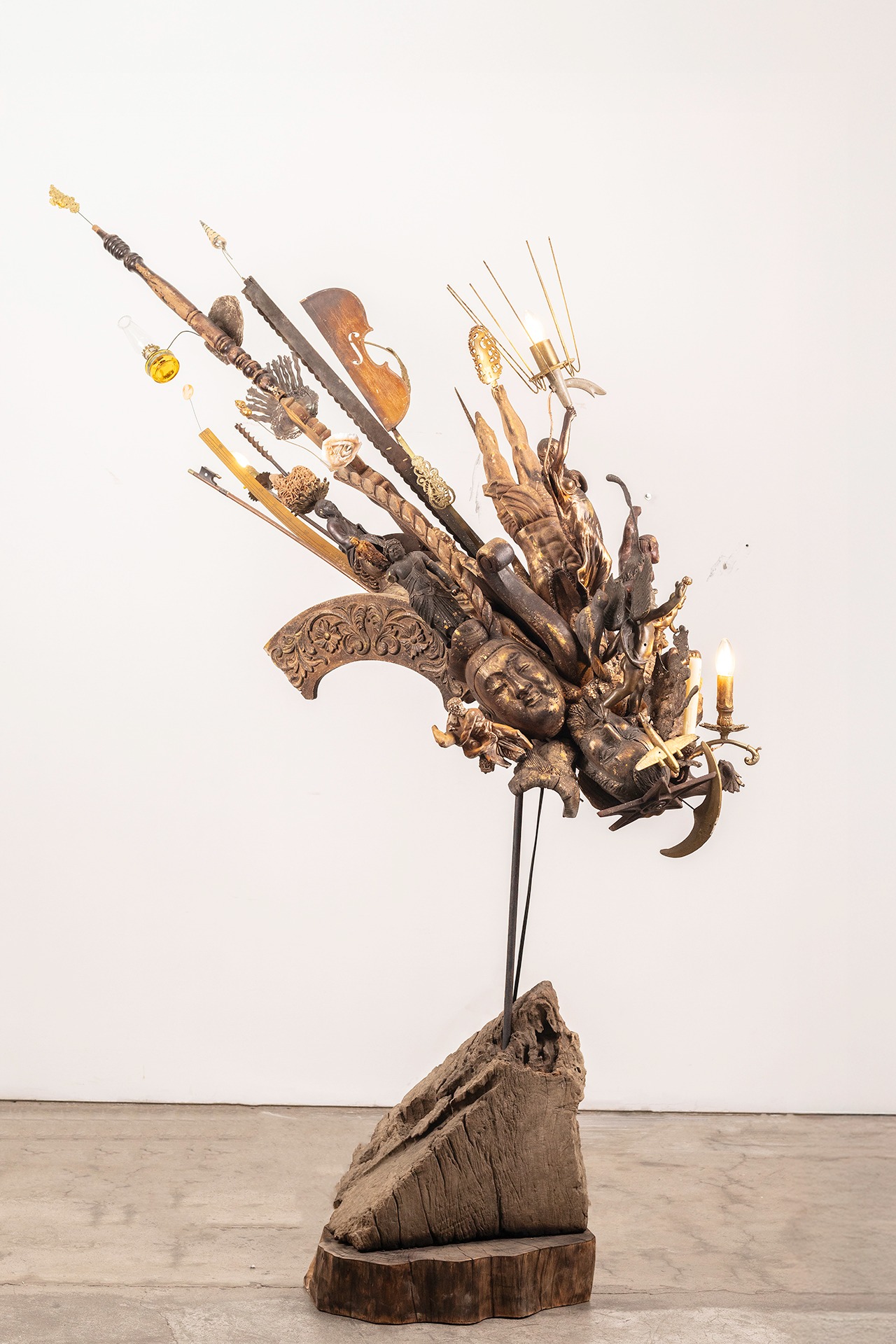
, 2025, wood, metal, plastic, crystals, disco balls, plastic beads, broken bowls and plates, mother of pearl, and other found objects, SPI_GH193.jpg)